Choose safe, cosy bedding for your rabbit
A complete, beginner-friendly guide to choosing safe, absorbent and comfortable bedding for your rabbit’s home.
Choosing the right bedding matters
Choosing the right bedding for your rabbit is important for their comfort, hygiene and overall health. Rabbits spend a lot of time resting, digging and grooming in their living space, so the bedding you choose should be safe, absorbent and comfortable.
Some bedding materials are excellent for rabbits, while others can actually be harmful. In this guide, we’ll explain the best bedding options for rabbits, what to avoid and how to keep your rabbit’s enclosure clean and comfortable.
What makes good rabbit bedding?
The best rabbit bedding should keep your rabbit dry, comfortable and safe. Because rabbits often chew or dig in their bedding, it is important to choose materials that are non-toxic, natural and low in dust.
- Highly absorbent to control moisture and odours.
- Dust-free to protect your rabbit’s sensitive respiratory system.
- Soft and comfortable for resting.
- Safe if chewed or accidentally nibbled.
- Easy to clean, remove and replace.
Best bedding options for rabbits
These are the most practical rabbit bedding options for comfort, cleanliness and everyday care.
Paper-based bedding
Paper bedding is one of the most popular and safest choices for rabbits. It is usually made from recycled paper pulp and designed to be soft, absorbent and low in dust.
- Excellent odour control
- Very absorbent
- Soft on rabbit feet
- Works well in litter boxes
Aspen wood shavings
Aspen shavings are another safe option for rabbit bedding. Unlike pine or cedar, aspen does not contain the same harmful aromatic oils.
- Natural material
- Good odour control
- Affordable
- Widely available
Hay
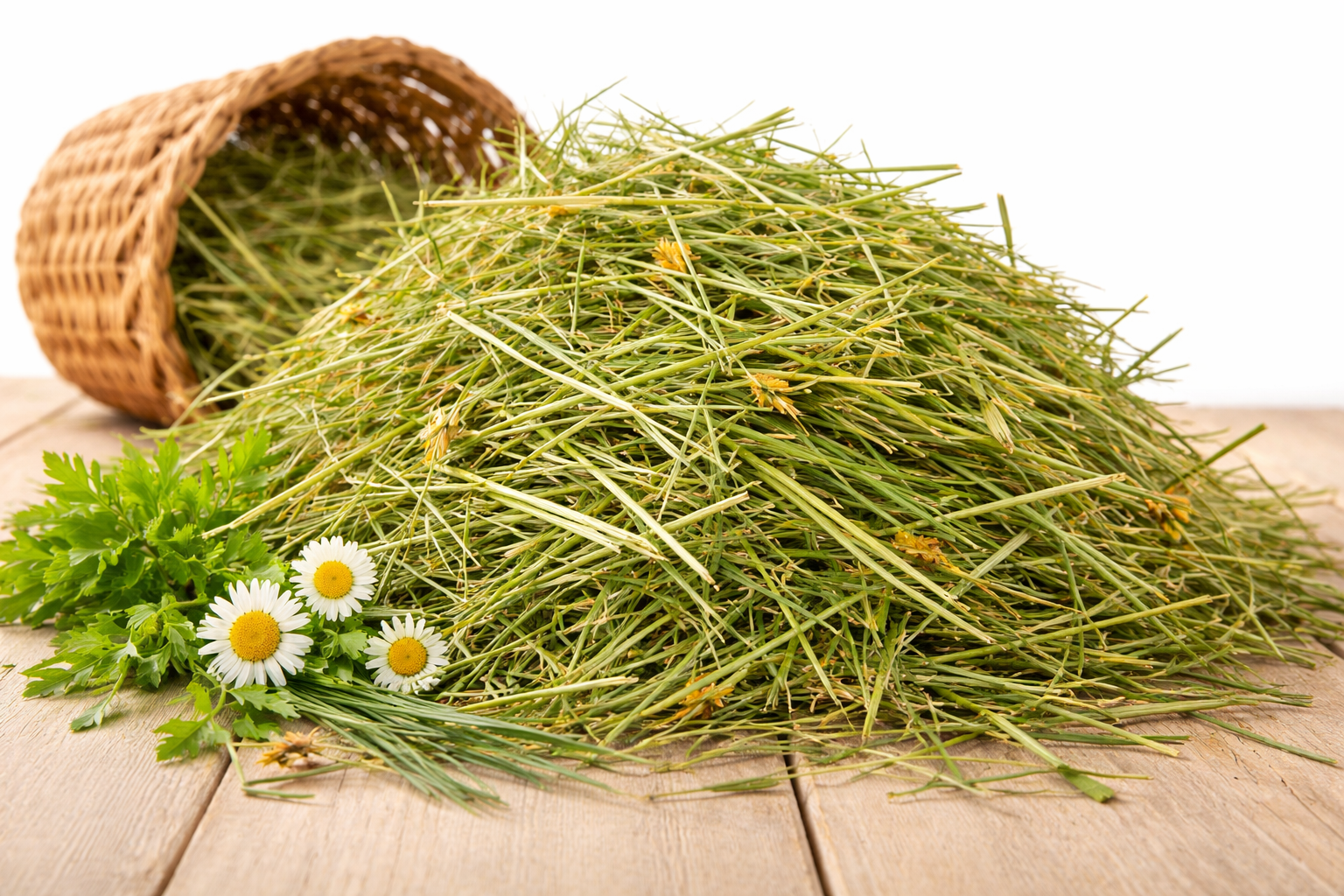
Hay can also be used as part of a rabbit’s bedding. Since rabbits already eat hay as the main part of their diet, it is safe for them to lie on, dig in and nibble.
- Natural comfort
- Warmth
- Chewing enrichment
- Useful in litter trays
Fleece liners
Fleece bedding is popular with indoor rabbit owners. Instead of disposable bedding, fleece liners sit on top of absorbent layers that collect moisture underneath.
- Reusable and washable
- Soft on rabbit feet
- Environmentally friendly
- Can reduce ongoing costs
Browse cosy bedding accessories
RabbitCare.co.uk also has a small bedding shop with soft mats, blankets and comfort accessories for supervised indoor setups, carriers and resting corners.
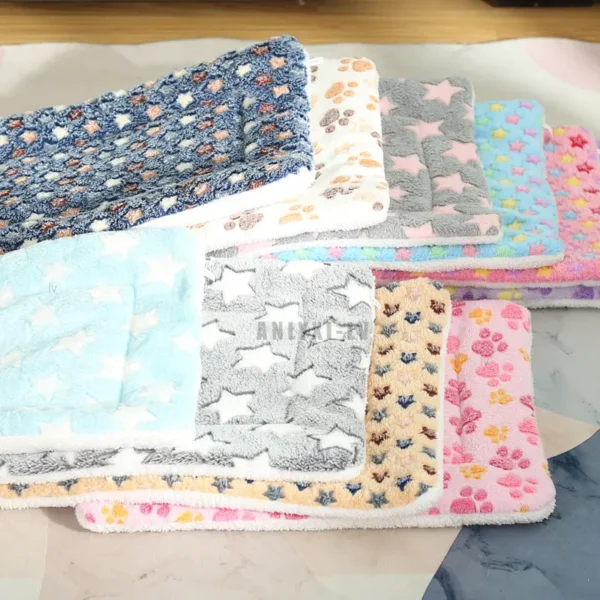
Small Fleece Blanket Mat for Rabbits
£8.18A small soft fleece-style mat for supervised indoor rabbit areas, carriers and cosy corners.
View product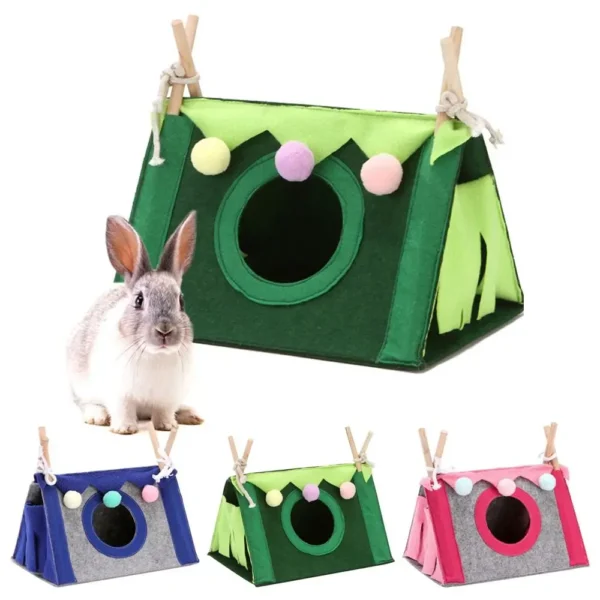
Small Pet Felt Tent
£10.10 – £10.35A compact felt tent for very small pets and short supervised use. Check size carefully for rabbits.
View product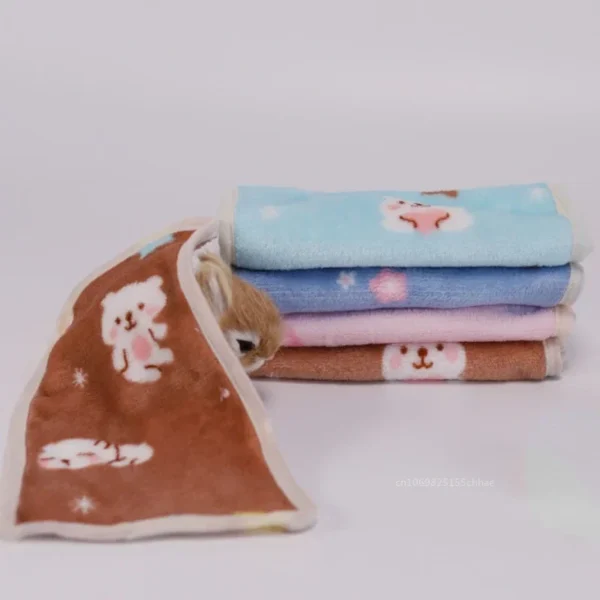
Soft Fleece Blanket for Rabbits
£4.20 – £4.64A reusable soft fleece blanket for carriers, supervised rest areas and indoor pet spaces.
View product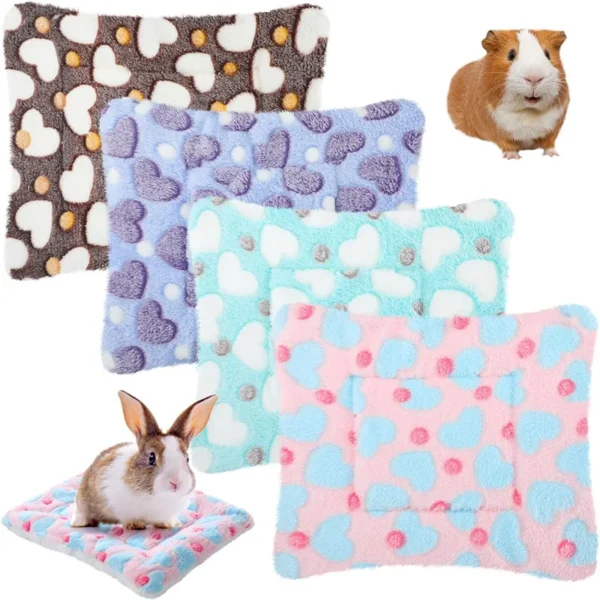
Soft Plush Hideaway Mat for Rabbits
£5.99 – £7.97A soft plush-style comfort mat for calm, supervised indoor use where fabric is safe.
View product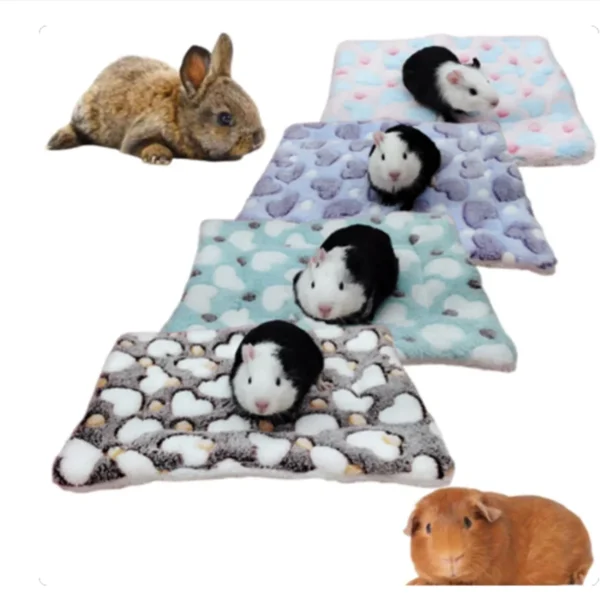
Soft Plush Mat for Rabbits
£6.93 – £9.02A cosy plush mat for small pets, best used only with supervision and non-chewing rabbits.
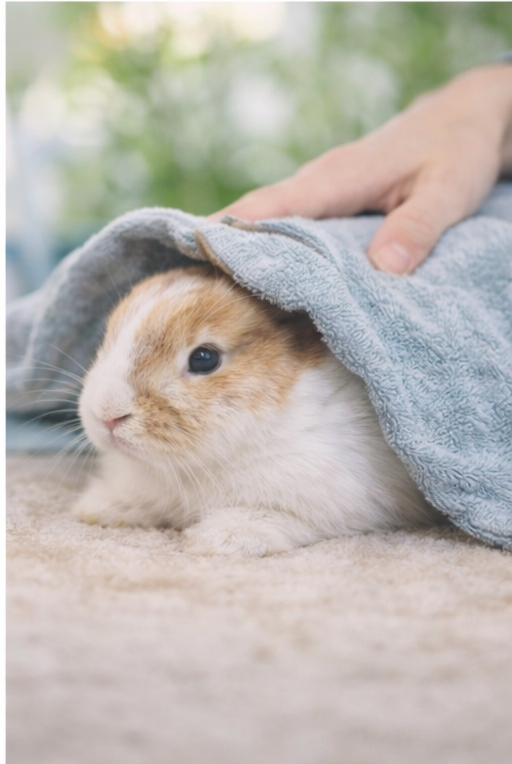
View productSafety note: Fabric bedding accessories should be used with supervision. Remove them if your rabbit chews, pulls fibres, digs through the fabric or if the item becomes damaged.
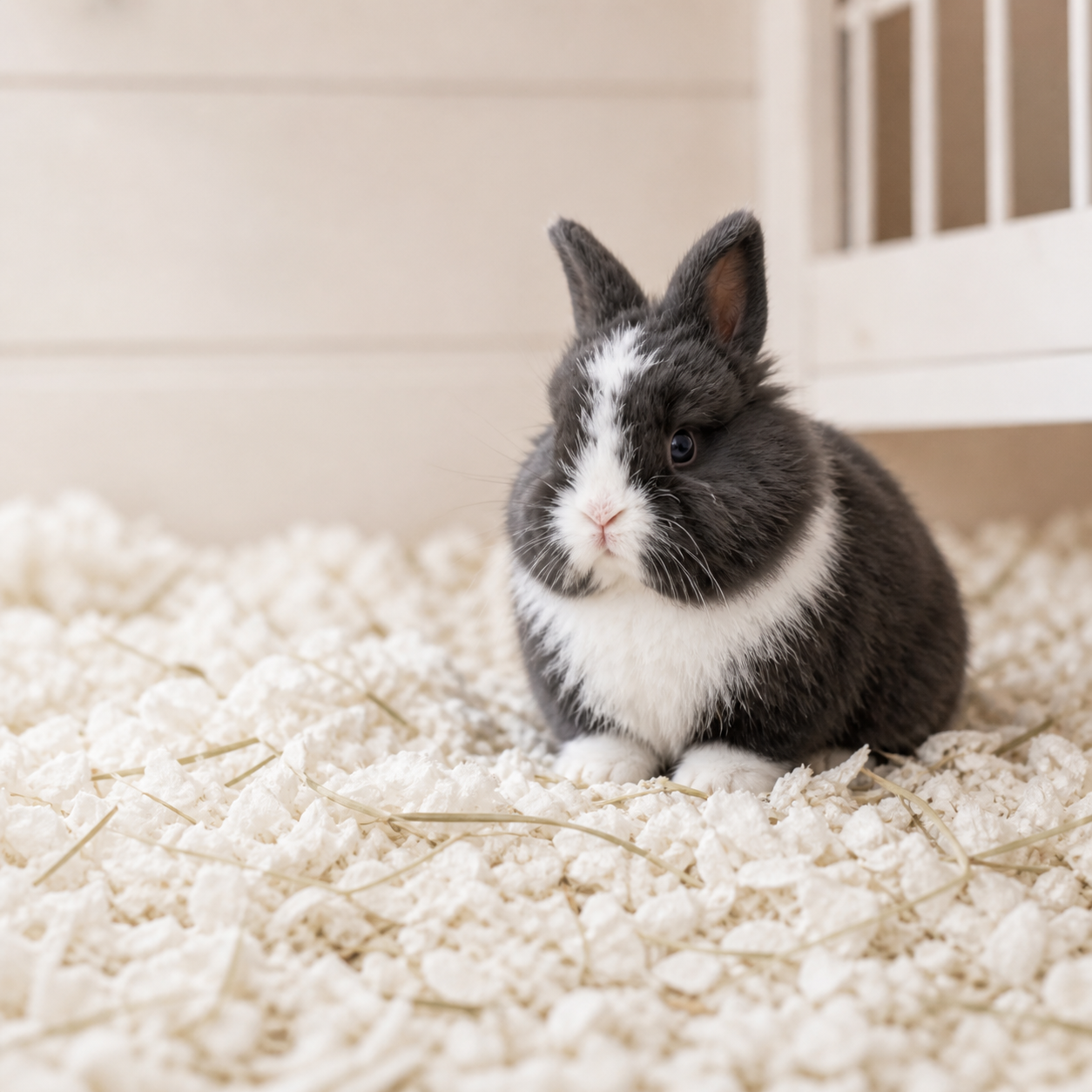
Use bedding where it helps most
Many rabbit owners use a mix of materials rather than one single bedding type everywhere. For example, you might use paper bedding in the litter box, fleece in a resting area and hay where your rabbit eats and forages.
The best setup is clean, dry, easy to maintain and comfortable for your rabbit’s feet. If your rabbit is elderly, disabled or prone to sore hocks, soft flooring and regular cleaning become even more important.
Bedding materials to avoid
Some bedding materials can be harmful to rabbits and should not be used. Rabbits have sensitive noses, delicate digestive systems and may chew bedding, so safety matters.
- Cedar and untreated pine shavings These can contain aromatic oils that may irritate the respiratory system and are not suitable rabbit bedding choices.
- Clay cat litter Clay-based litter can create dust and may cause digestive problems or blockages if eaten.
- Scented bedding Artificial fragrances can irritate a rabbit’s sensitive nose and lungs. Choose unscented, natural bedding instead.
How often should rabbit bedding be changed?
Keeping your rabbit’s bedding clean is essential for hygiene, odour control and comfort.
Remove wet bedding daily
Check litter areas and damp patches every day. Removing wet bedding quickly helps keep the enclosure fresher.
Change litter areas every 2–3 days
Litter trays usually need regular replacing, especially if more than one rabbit uses the same area.
Deep clean weekly
Give the enclosure a proper clean each week, replacing bedding and checking for hidden damp spots.
Tips for setting up rabbit bedding
A comfortable rabbit enclosure usually includes several different areas. Providing different textures and materials can help keep your rabbit comfortable, clean and entertained.
- Use a litter box with paper bedding, rabbit-safe litter or suitable pellets.
- Create a resting area with fleece or another soft, dry surface.
- Provide plenty of hay for eating, nesting and natural foraging behaviour.
- Keep bedding dry and replace soiled areas before they become smelly.
- Watch how your rabbit uses the space and adjust the setup to suit them.
Rabbit bedding FAQs
Quick answers to common questions about choosing and using bedding for rabbits.
What is the safest bedding for rabbits?
Paper-based bedding is one of the safest everyday choices because it is usually soft, absorbent and low in dust. Aspen shavings, hay and fleece liners can also work well depending on your setup and your rabbit’s chewing habits.
Can rabbits use fleece bedding?
Yes, fleece can be useful for indoor rabbits, carriers and resting areas, but only where it is safe for that rabbit. Remove fleece straight away if your rabbit chews it, pulls threads or tries to eat fabric fibres.
Can I use hay as bedding for rabbits?
Hay is safe for rabbits to sit on, dig in and nibble, and it can be useful in litter trays or nesting areas. It should still be kept clean and dry, and rabbits should always have fresh feeding hay available.
How often should rabbit bedding be changed?
Remove wet bedding every day, change litter areas every 2–3 days and deep clean the enclosure weekly. Rabbits that share an enclosure, urinate heavily or use soft fabric areas may need more frequent cleaning.
What bedding should rabbits avoid?
Avoid cedar, untreated pine shavings, clay cat litter and scented bedding. These can be dusty, irritating, unsafe if eaten or too strongly fragranced for a rabbit’s sensitive respiratory system.
The best rabbit bedding is safe, absorbent and comfortable
Paper bedding, aspen shavings, hay and fleece liners can all be excellent options depending on your rabbit’s setup. Avoid materials like cedar, untreated pine, clay litter or scented bedding, which may be harmful to rabbits.
By choosing the right bedding and keeping your rabbit’s enclosure clean, you can create a healthier and more comfortable living environment for your pet.
Related rabbit care guides
Help your visitors move naturally into more useful RabbitCare pages.

RabbitCare.co.uk provides general rabbit care information for UK owners. It does not replace advice from a rabbit-savvy vet. If your rabbit stops eating, stops pooing, seems in pain or is suddenly unwell, contact a vet urgently.