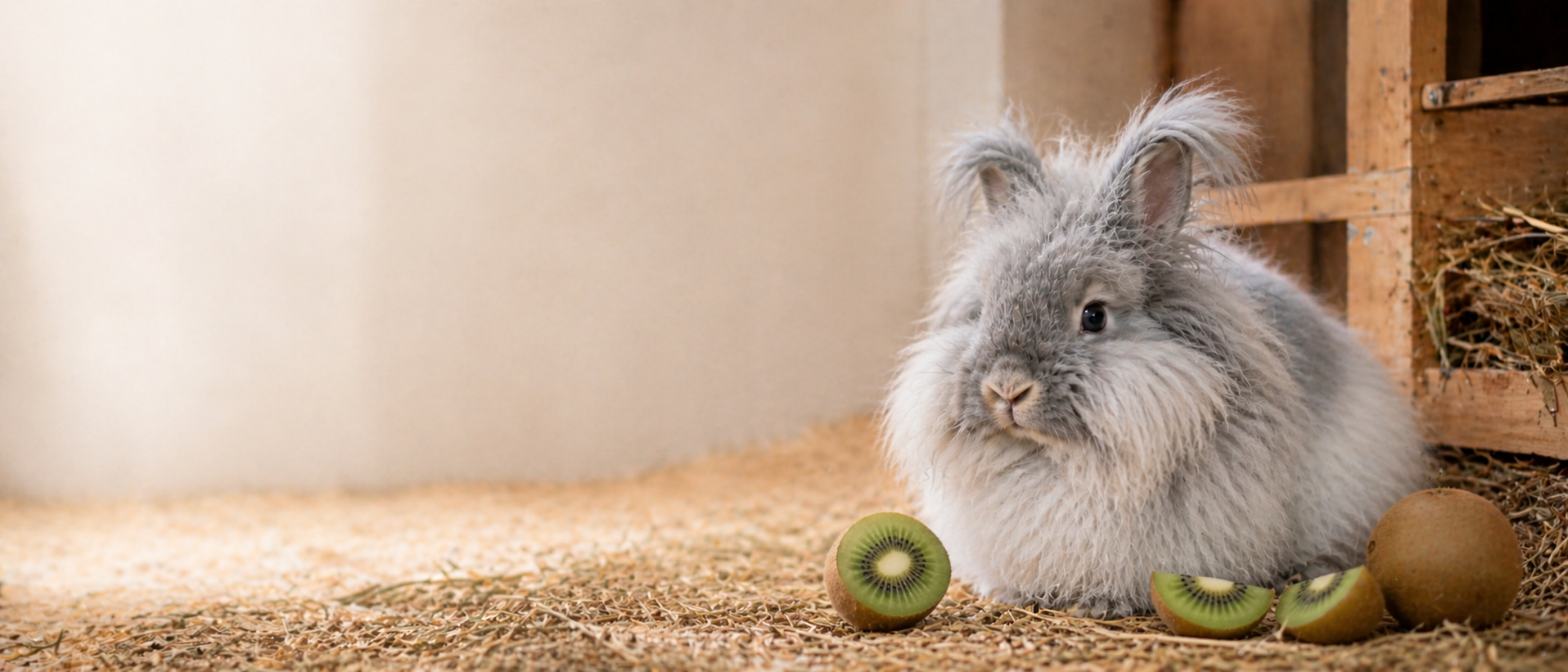
Yes, rabbits can eat kiwi, but only as a tiny treat
Kiwi can be safe for rabbits in very small amounts, but it is sugary and acidic, so it should not become a daily food.
Kiwi can be safe, but it is sweet and acidic
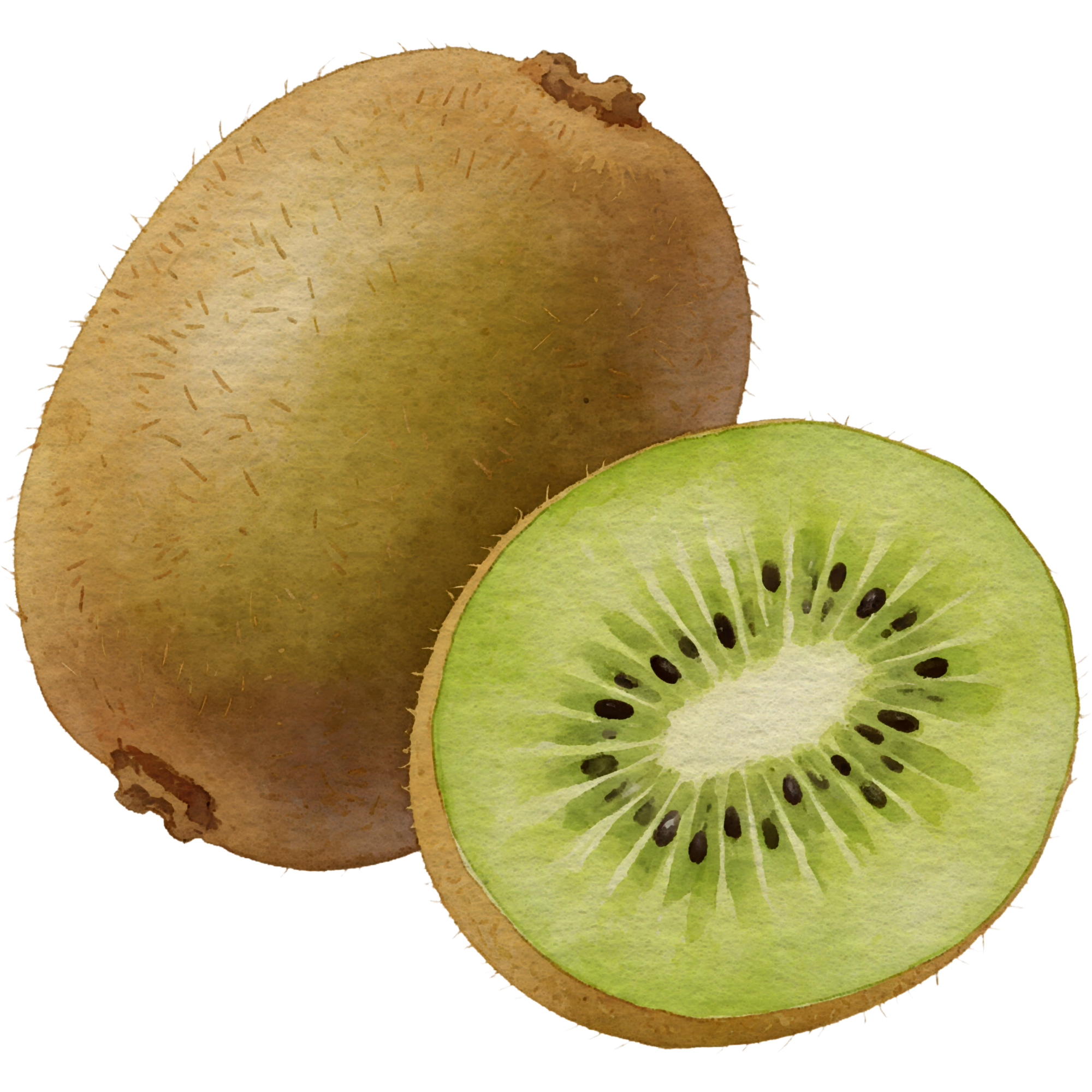
Kiwi is a tangy fruit with soft green flesh and tiny edible seeds. Rabbits can eat a tiny amount of ripe kiwi flesh as an occasional treat.
However, kiwi contains natural sugars and is more acidic than many everyday rabbit foods. It should never replace hay, leafy greens or fresh water, and it should not become a regular part of daily feeding.
Is kiwi safe for rabbits?
Yes, ripe kiwi flesh can be safe for most healthy rabbits when fed in tiny amounts. The tiny seeds are usually fine, but the fuzzy skin may be best removed, especially for sensitive rabbits.
A healthy rabbit diet should consist mostly of hay, which supports digestion and helps keep a rabbit’s teeth worn down naturally. Hay should still make up around 80–90% of a rabbit’s daily food intake.
Nutritional value of kiwi
Kiwi contains water, vitamin C and plant nutrients. It also contains natural sugars and acidity, so moderation is important.
Vitamin C
Kiwi contains vitamin C, though rabbits should not rely on fruit as a main vitamin source.
Some fibre
Kiwi contains some fibre, but hay is still the essential fibre source for rabbit digestion.
Water content
Kiwi is juicy, which is another reason to keep portions small and occasional.
Plant nutrients
Kiwi can add occasional variety, but it is not an essential rabbit food.
Sugar and acidity
Because kiwi is sweet and acidic, too much can contribute to digestive upset.
Hay comes first
Kiwi should never replace hay, fresh water, leafy greens or a balanced rabbit diet.
How much kiwi can rabbits eat?
Kiwi should only be offered in tiny portions. A sensible guide is a very small piece of ripe kiwi flesh once in a while, rather than a regular daily treat.
Because kiwi is tangy, acidic and sweet, some rabbits may be sensitive to it. If your rabbit has never tried kiwi before, start with a tiny piece and watch their digestion afterwards.
- Offer a tiny piece, not a slice or half kiwi.
- Feed kiwi occasionally, not every day.
- Avoid dried, sweetened or processed kiwi.
- Introduce new foods slowly and watch your rabbit’s poo and behaviour.
Be careful with kiwi skin and dried kiwi
Kiwi flesh is the safest part to offer. The fuzzy skin can be harder to clean and may not suit every rabbit, so peeling is a sensible choice.
- Peel if unsure Kiwi skin is edible for people, but for rabbits it is simplest to remove it and feed only a tiny piece of flesh.
- Avoid dried kiwi Dried kiwi is concentrated in sugar and is often sweetened, so it is not a good rabbit treat.
- No kiwi foods Do not feed kiwi yoghurt, smoothies, juice, sweets, jam, cakes or processed foods.
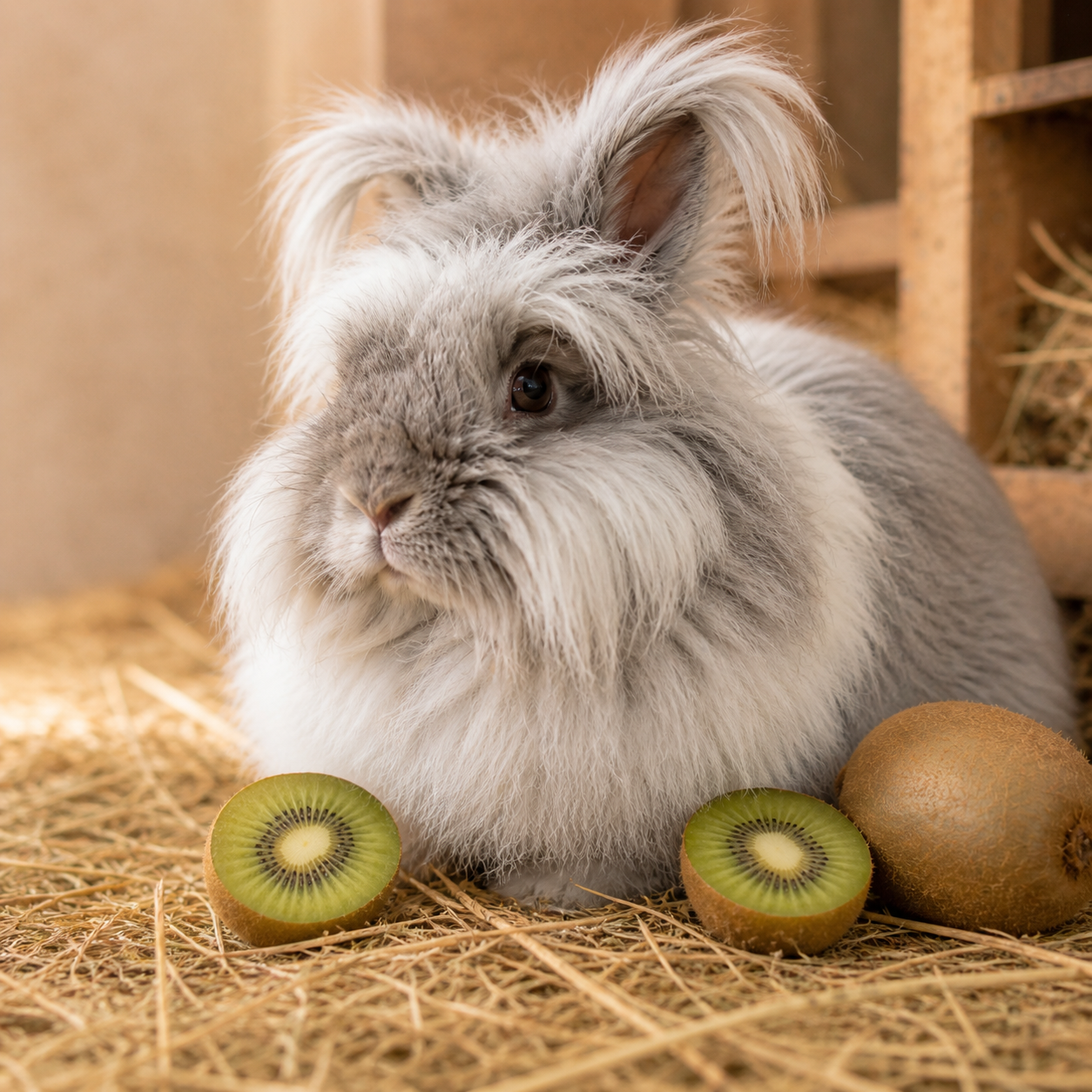
Use kiwi as a rare tiny treat
Because rabbits often enjoy sweet fruit, kiwi may be tempting to them. Its tangy taste means some rabbits may love it, while others may ignore it.
If your rabbit has never tried kiwi before, offer a tiny piece of peeled flesh and watch for any changes in appetite, poo or behaviour afterwards.
How to prepare kiwi for rabbits
Before feeding kiwi to your rabbit, keep it fresh, plain and carefully prepared. Avoid dried or processed kiwi products completely.
Choose ripe kiwi
Use fresh, ripe kiwi. Avoid dried, cooked, sweetened or processed kiwi.
Wash and peel
Wash the kiwi and peel away the fuzzy skin, especially if your rabbit is sensitive.
Cut a tiny piece
Offer only a very small piece of flesh, especially when introducing kiwi for the first time.
Feed rarely
Use kiwi as an occasional treat rather than a regular daily food.
Benefits and signs your rabbit enjoys kiwi
When given in moderation, kiwi can add variety and make treat time interesting. Even if your rabbit loves it, fruit should always be limited.
Adds variety
A tiny kiwi piece can add occasional variety to a hay-based diet.
Small amounts of nutrients
Kiwi contains some vitamin C and plant nutrients, but it should not replace leafy greens or hay.
Soft texture
Ripe kiwi flesh is soft and easy to nibble, though portions should stay tiny.
Bonding treat
A tiny piece may be useful for positive interaction if your rabbit tolerates it well.
Signs they enjoy it
Your rabbit may run over quickly, sniff eagerly, nibble enthusiastically or search for more.
Still limit treats
Even enthusiastic rabbits should only have kiwi rarely to keep their diet balanced.
Rabbit kiwi FAQs
Quick answers to common questions about feeding kiwi to rabbits safely.
Can rabbits eat kiwi safely?
Yes, rabbits can eat a tiny amount of ripe kiwi flesh as an occasional treat. Kiwi is sugary and acidic, so it should not be fed daily or in large portions.
How much kiwi can I give my rabbit?
Offer only a very small piece of ripe kiwi flesh now and again. Start with a tiny amount the first time and monitor your rabbit’s droppings, appetite and behaviour afterwards.
Can rabbits eat kiwi skin?
Kiwi skin is not usually the best part to feed rabbits because it is fuzzy and harder to clean. Peeling the kiwi and offering only a tiny piece of flesh is the safest simple approach.
Can rabbits eat dried kiwi?
No. Dried kiwi is concentrated in sugar and is often sweetened, so it is not suitable for rabbits. Avoid dried, sweetened and processed kiwi products.
Can baby rabbits eat kiwi?
Baby rabbits should not be given kiwi. Young rabbits need a stable diet based on hay, suitable pellets and carefully introduced greens once they are old enough.
Kiwi can be a safe occasional treat for rabbits
Rabbits can eat a tiny amount of ripe kiwi flesh as an occasional treat. However, because kiwi is sugary and acidic, it should be offered rarely and in very small portions.
Peel the skin if you are unsure, avoid dried or processed kiwi, and watch your rabbit’s digestion when introducing anything new. A rabbit’s diet should still be based mainly on hay, with fresh vegetables and leafy greens forming the rest of their daily food.
Related rabbit care guides
More useful guides for rabbit foods, treats and daily diet basics.
RabbitCare.co.uk provides general rabbit care information for UK owners. It does not replace advice from a rabbit-savvy vet. If your rabbit stops eating, stops pooing, seems in pain or is suddenly unwell, contact a vet urgently.