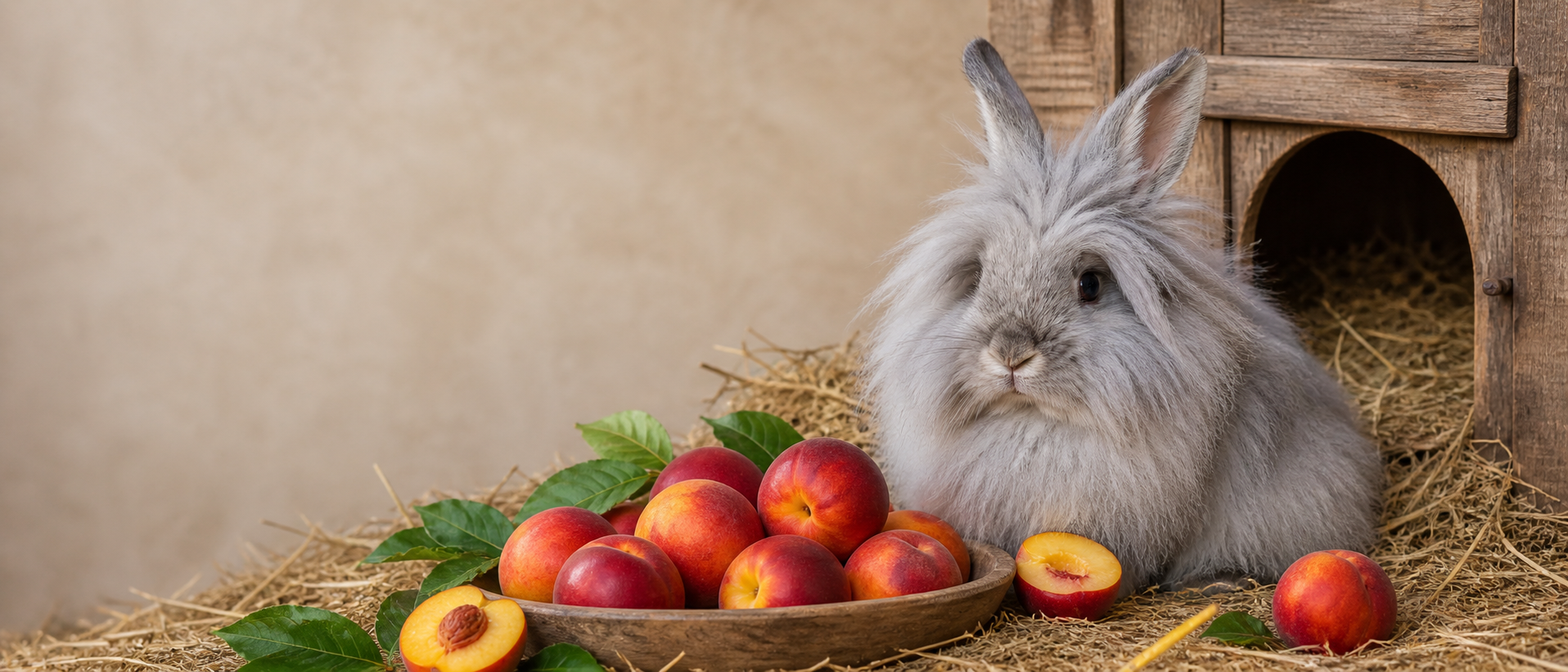
Yes, rabbits can eat nectarine flesh, but the stone must always be removed
Nectarine flesh is safe for rabbits as an occasional treat, but the stone contains compounds that are harmful, always remove it completely before feeding.
Nectarine is a juicy stone fruit rabbits can enjoy in moderation
Nectarines are smooth-skinned stone fruits closely related to peaches, and their sweet, juicy flesh is something many rabbits find appealing. The flesh is safe for rabbits to eat and does not need to be peeled, the skin is fine to leave on.
However, nectarine is a larger, juicier and more sugary fruit than berries, which means portions need to be kept particularly small. More importantly, the stone at the centre of every nectarine must always be removed entirely before feeding. The stone itself is a physical hazard, and the kernel inside it contains compounds that can be harmful.
Is nectarine safe for rabbits?
Yes, the flesh and skin of a ripe nectarine are safe for most healthy adult rabbits when offered in small amounts. Nectarine should be treated as a sweet occasional treat rather than a vegetable or everyday food, its higher sugar and moisture content make it less suitable for regular feeding than leafy greens.
The most important rule with nectarine is simple: always remove the stone. Never offer a whole nectarine or a half with the stone still present. Once the stone is out and the flesh is cut into small pieces, nectarine can be a pleasant and well-received treat.
Nutritional value of nectarine
Nectarine flesh contains several vitamins and a good amount of water, but also natural sugars. This combination makes it a treat to enjoy in small amounts rather than a dietary staple.
Vitamin A
Nectarines contain beta-carotene which converts to vitamin A, useful in small amounts as part of a varied diet.
Vitamin C
Nectarine provides some vitamin C, though leafy greens remain a more appropriate daily source for rabbits.
Some fibre
Nectarine contains a small amount of fibre, but hay is always the most important fibre source for rabbits.
High water content
Nectarine is very juicy, which is another reason to keep portions small, too much can loosen stools.
Natural sugars
Nectarine is noticeably sweet. Too much can cause digestive upset or contribute to weight gain over time.
Hay comes first
Nectarine should never replace hay, fresh water, leafy greens or a balanced daily rabbit diet.
How much nectarine can rabbits eat?
Because nectarine is juicier and sweeter than most berries, portions should be kept small. One or two small cubes of nectarine flesh, roughly a teaspoon’s worth, once or twice a week is a sensible guide for a healthy adult rabbit.
Smaller or younger rabbits should receive even less. If you are offering nectarine for the first time, start with a single small piece and watch for any changes in droppings, appetite or behaviour over the following day before offering more.
- Offer one or two small cubes of flesh at a time, not a large slice.
- Feed nectarine once or twice a week at most.
- Always remove the stone completely before feeding.
- Introduce slowly and monitor droppings and appetite afterwards.
Always remove the stone, it is not safe for rabbits
The stone at the centre of a nectarine must be removed before feeding. It presents two separate risks: a physical choking and obstruction hazard, and a chemical one, as the kernel inside the stone contains amygdalin, a compound that can release cyanide when broken down.
- Remove the stone every time Never offer a whole nectarine or a halved nectarine with the stone in place. Always cut the flesh away from the stone and discard it safely before feeding.
- Check for stone fragments When cutting around the stone, check the flesh for any small fragments that may have broken off, and remove them before serving.
- No tinned, dried or sweetened nectarine Only use fresh, ripe nectarine. Tinned nectarine in syrup, dried nectarine and any processed nectarine products contain far too much sugar and are not suitable for rabbits.
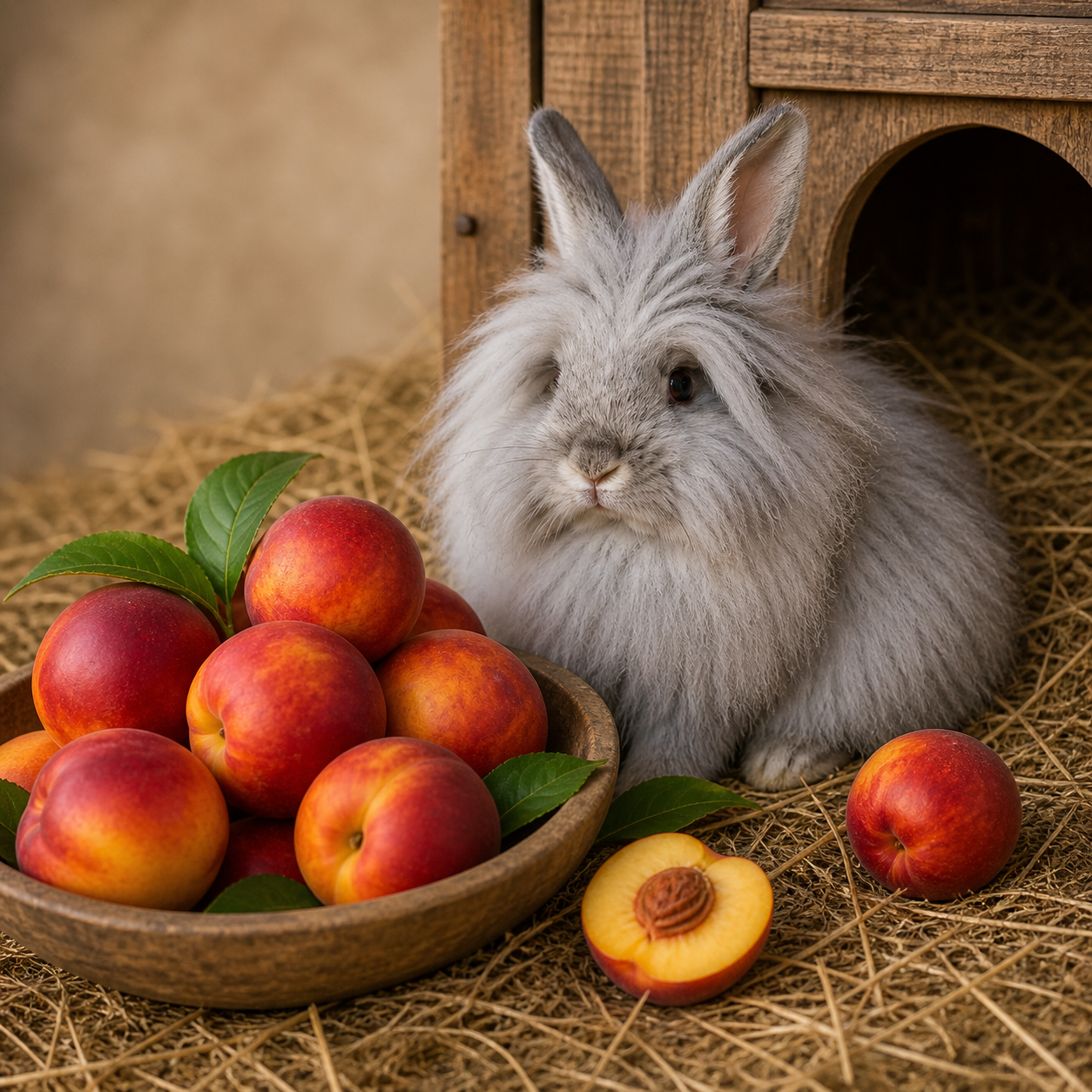
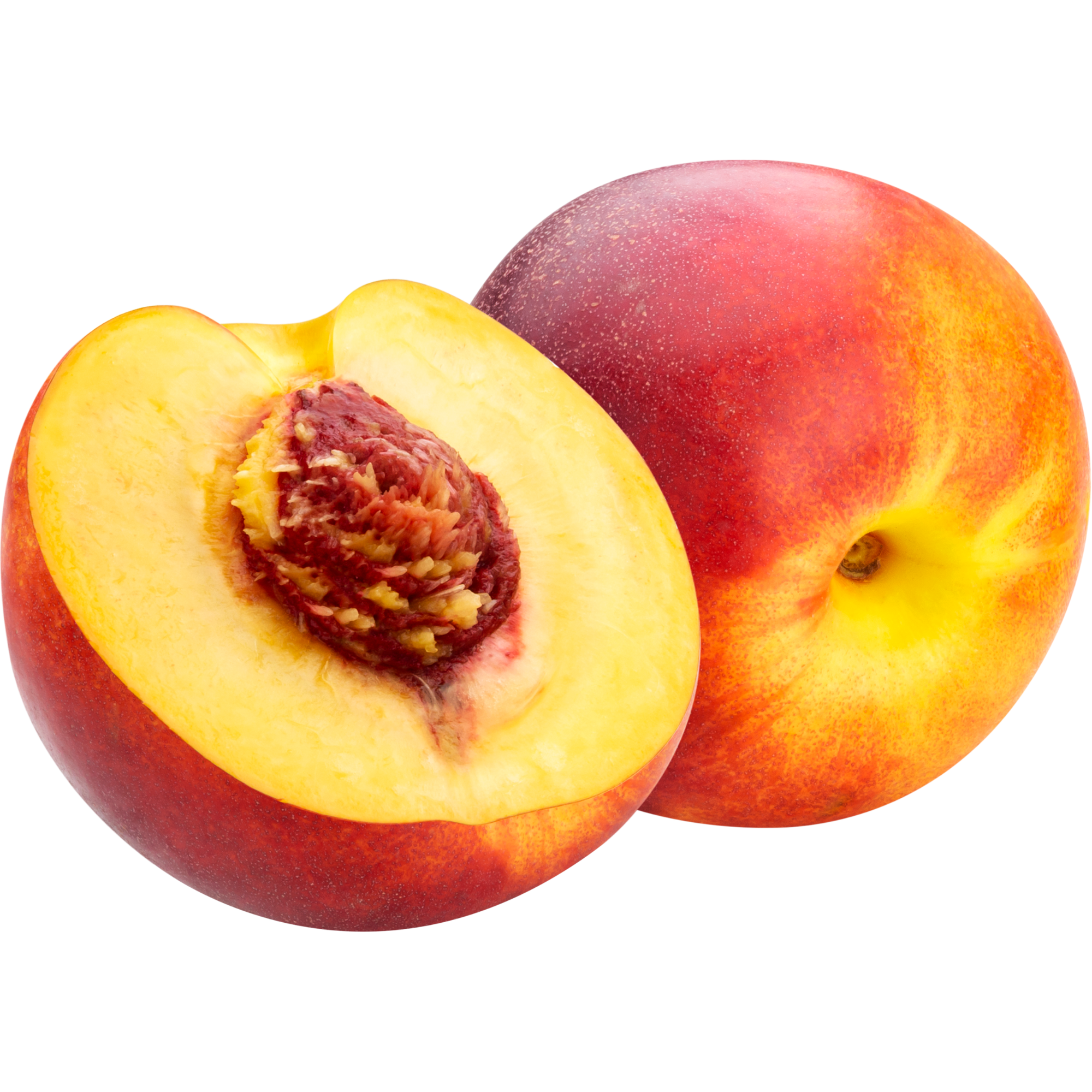
Nectarine is a sweet treat most rabbits enjoy readily
The sweet, fragrant flesh of a ripe nectarine tends to go down very well with rabbits. Unlike some of the more astringent fruits in this guide series, most rabbits show immediate interest in nectarine without any hesitation.
Because nectarines are larger than berries, there is a temptation to offer more than is appropriate. Cutting the flesh into small, clearly portioned cubes before offering makes it much easier to control how much your rabbit receives in one sitting.
How to prepare nectarine for rabbits
Preparing nectarine safely takes only a minute. The key step is removing the stone, everything else is straightforward.
Choose a ripe nectarine
Use a fresh, fully ripe nectarine. Avoid overripe, mouldy or very unripe fruit, and never use tinned or dried nectarine.
Wash thoroughly
Rinse the nectarine under cold water to remove any dirt, wax or pesticide residue from the smooth skin.
Remove the stone
Cut the flesh away from the stone and discard the stone completely. Check for any small fragments before serving.
Cut into small pieces
Slice the flesh into small cubes. The skin can stay on. Offer one or two small pieces and store any remainder in the fridge.
Benefits and signs your rabbit enjoys nectarine
When prepared correctly and offered in moderation, nectarine can be a very well-received treat. Most rabbits respond to it enthusiastically, which is also a reminder to keep portions firmly controlled.
Highly palatable
The sweet fragrant flesh of nectarine appeals to most rabbits immediately, making it one of the more reliable fruit treats.
Small amounts of vitamins
Nectarine provides vitamins A and C in small amounts, complementing a diet already rich in hay and leafy greens.
No peeling needed
Unlike some fruits, nectarine skin is perfectly safe and there is no need to peel it before feeding, one less preparation step.
Bonding treat
Because most rabbits love nectarine, it can work well as a reward during gentle handling or as a positive bonding moment.
Signs they enjoy it
Your rabbit may run over eagerly, sniff intensely, chew with clear enthusiasm or nudge your hand looking for more.
Keep portions small
Enthusiasm from your rabbit is not a reason to offer more. Keep to one or two small cubes regardless of how keenly they respond.
Nectarine FAQs
Quick answers to common questions about feeding nectarines to rabbits.
Can rabbits eat nectarines?
Yes, rabbits can eat fresh nectarine flesh in small amounts. Nectarine is sweet and juicy, so it should be treated as an occasional fruit treat rather than a daily food.
Can rabbits eat nectarine skin?
Yes, rabbits can eat nectarine skin if the fruit is washed well. The smooth skin is fine to leave on, but the stone must always be removed before feeding.
Can rabbits eat nectarine stones?
No. Rabbits should never eat nectarine stones. They are a choking and obstruction risk, and the kernel inside contains compounds that can be harmful.
How much nectarine can rabbits eat?
One or two small cubes of nectarine flesh is enough for most healthy adult rabbits. Offer nectarine no more than once or twice a week and start with a tiny piece the first time.
Can baby rabbits eat nectarines?
Baby rabbits should not be given sugary fruit treats like nectarine. Young rabbits need a stable diet based around hay, water and age-appropriate rabbit food.
Nectarine can be a safe and popular rabbit treat when prepared correctly
Rabbits can eat fresh nectarine flesh in small amounts, and most take to it very readily. The flesh and skin are both safe, the stone is the only part that must never be offered, and it should always be removed and discarded before feeding.
Keep portions to one or two small cubes at a time, offer nectarine no more than once or twice a week, and never use tinned, dried or sweetened versions. As with all fruit, nectarine is a treat on top of a diet that should be based firmly on hay, with fresh vegetables and leafy greens making up the rest of your rabbit’s daily food.
Related rabbit care guides
More useful guides for rabbit foods, treats and daily diet basics.
RabbitCare.co.uk provides general rabbit care information for UK owners. It does not replace advice from a rabbit-savvy vet. If your rabbit stops eating, stops pooing, seems in pain or is suddenly unwell, contact a vet urgently.