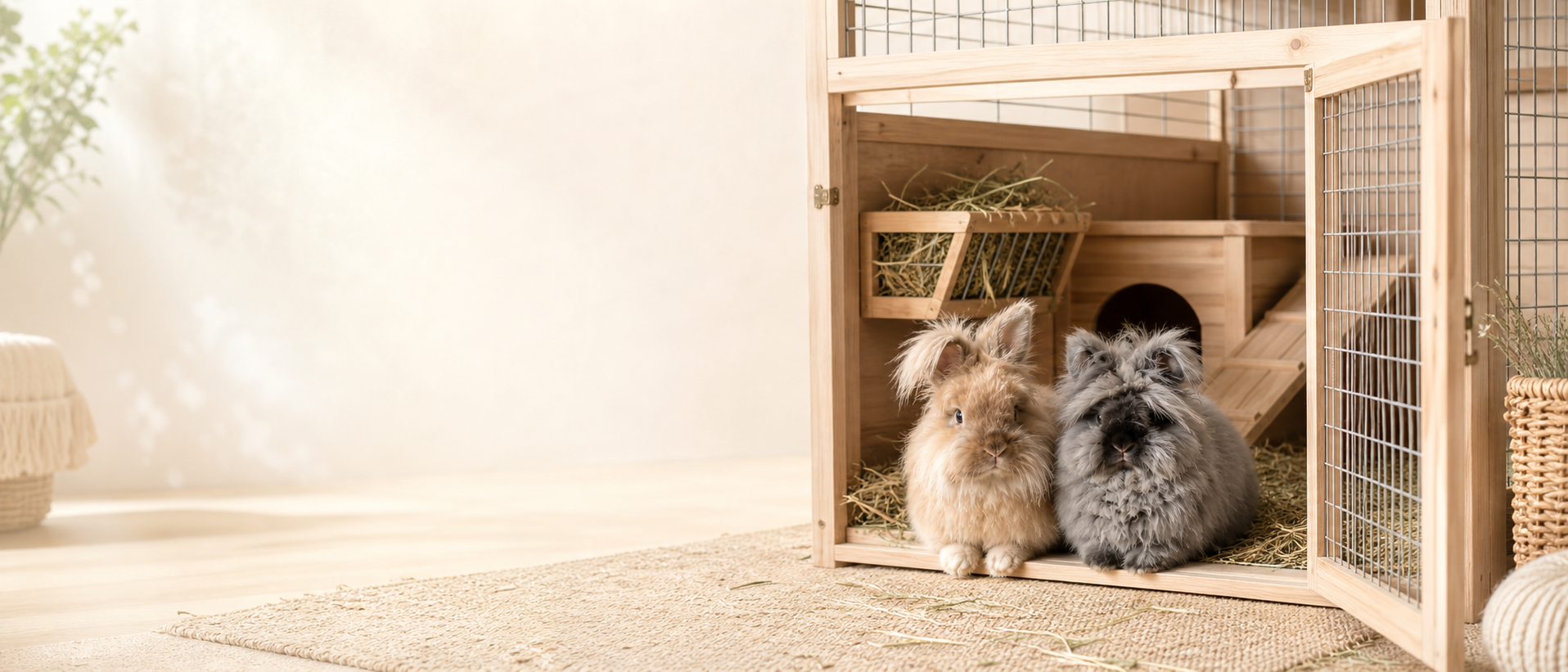
Rabbits need much more than a small cage
Rabbits are active, curious animals that need room to hop, stretch, stand, explore and rest comfortably. Bigger spaces support better health and happier behaviour.
A properly sized enclosure supports your rabbit’s wellbeing
Rabbits are active, curious animals that need plenty of space to move, stretch and explore. Many people assume rabbits can live comfortably in small cages, but in reality, rabbits need much more room than most pet shop cages provide.
A properly sized rabbit enclosure helps prevent boredom, encourages exercise and supports your rabbit’s overall health and wellbeing.
In this guide, we’ll explain how big a rabbit cage should be, the minimum space requirements and how to create a comfortable living area for your rabbit.
How much space does a rabbit need?
A rabbit’s enclosure should be large enough for them to stand fully upright on their back legs, stretch out completely while lying down and take several hops in any direction.
A good UK minimum is a single enclosed area of at least 3m x 2m x 1m high. This gives rabbits room to move properly, and the full space should be available at all times rather than only during supervised exercise. Bigger is always better.
Rabbit enclosure size guide
These are useful minimum guidelines, but rabbits are active and benefit from as much extra safe space as you can provide.
Minimum length
At least 3m
9 ft 10 in
Minimum width
At least 2m
6 ft 7 in
Minimum height
At least 1m
3 ft 3 in
| Setup | Minimum recommended space |
|---|---|
| Single enclosed living area | 3m x 2m x 1m high |
| Approximate floor space | 6 m² / around 64 sq ft |
| Availability | Accessible at all times, not only during exercise sessions |
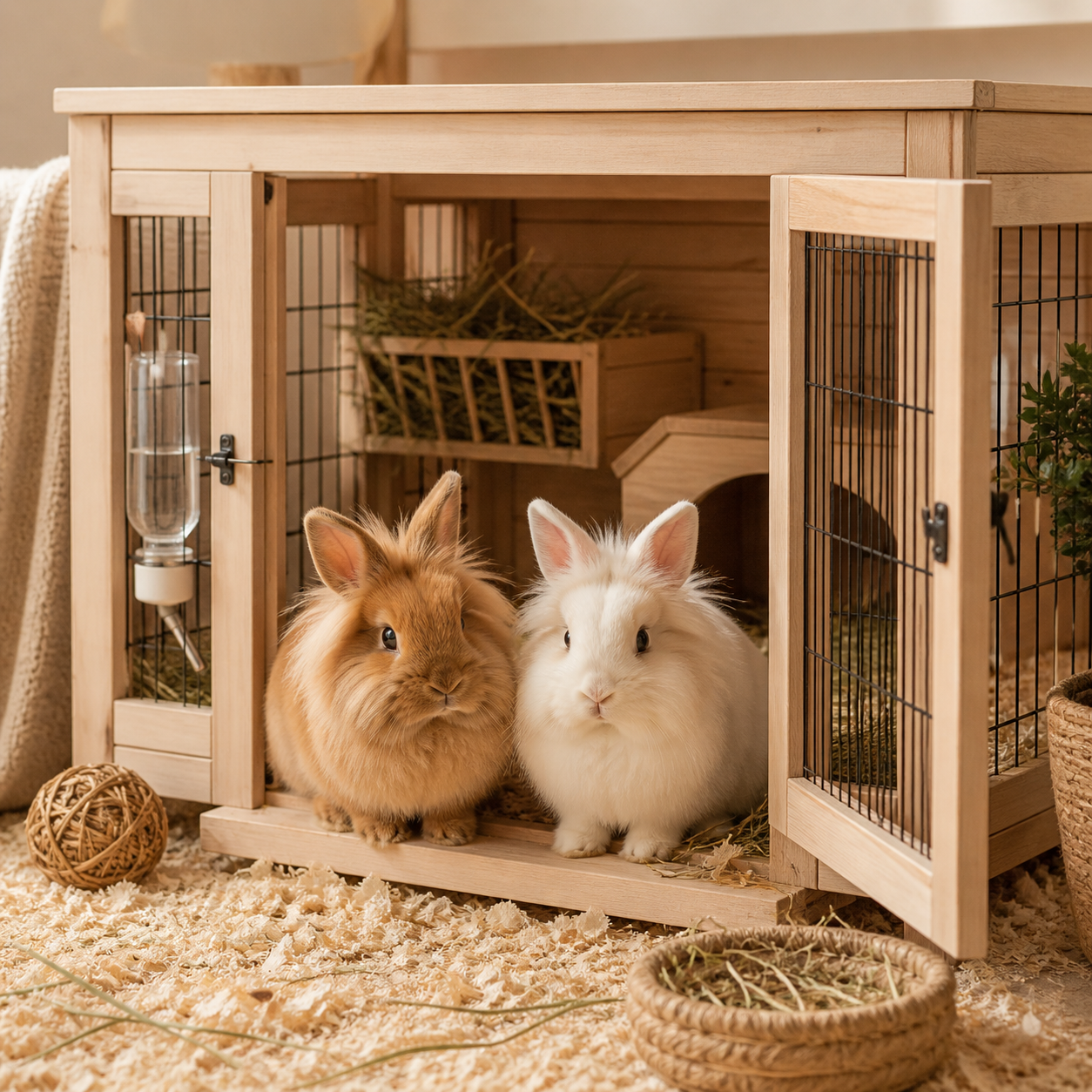
Many owners choose pens instead of small cages
Many rabbit owners use exercise pens or large enclosures instead of traditional cages. These provide much more room for rabbits to hop around, explore and play.
Inside the enclosure you can include a litter tray, hay feeder, water bowl or bottle, hiding house, toys and tunnels.
Why small rabbit cages are not enough
Many cages sold in pet shops are too small for rabbits. Rabbits are naturally active animals that would normally run and explore large areas. Giving them enough space helps keep them physically and mentally healthy.
- Lack of exercise
- Obesity
- Muscle weakness
- Boredom and stress
- Destructive behaviour
- Reduced wellbeing
How tall should a rabbit cage be?
The cage should be tall enough for a rabbit to stand fully upright. A good minimum height is 1m, or about 3 ft 3 in.
This allows rabbits to perform a behaviour called “periscoping”, where they stand up on their hind legs to look around.
- Your rabbit should be able to stand upright without touching the roof.
- They should be able to stretch out fully while resting.
- They should be able to take several hops in different directions.
Outdoor rabbits need a hutch and a secure run
If your rabbit lives outdoors, they should have both a hutch for shelter and a large secure run for exercise and enrichment.
Hutch or sleeping area
A sheltered area gives rabbits somewhere dry, safe and comfortable to rest.
Large secure run
The run should allow rabbits to run, dig and explore safely.
Suggested run size
A good outdoor run should be at least 8 ft x 4 ft, or 2.4 m x 1.2 m, though larger is always better.
Protection and safety
Outdoor spaces need secure sides, safe flooring, shade, weather protection and predator protection.
Some rabbits free roam indoors
Some owners choose to let their rabbits free roam indoors, similar to a cat. In this setup, rabbits may have access to a whole room, a large pen with open access or supervised time around the house.
Free roam rabbits still need a base area where their litter box, food and hay are located. The room should also be rabbit-proofed to protect wires, furniture and unsafe items.
What to put inside a rabbit cage or enclosure
A well-designed rabbit enclosure should include food, water, comfort, hiding spaces and enrichment.
Hay feeder
Hay should always be available because it is the most important part of a rabbit’s diet.
Litter box
Most rabbits can learn to use a litter tray, especially when hay is placed nearby.
Water bowl or bottle
Heavy ceramic bowls often work well because they are harder to tip over.
Hideout house
Rabbits feel safer when they have somewhere to hide and rest quietly.
Toys and enrichment
Cardboard tunnels, willow chew toys and digging boxes can help prevent boredom.
Comfortable flooring
Choose safe, non-slip flooring and bedding that supports healthy feet and easy cleaning.
Signs your rabbit needs more space
Your rabbit may need a larger enclosure if you notice signs of boredom, frustration or lack of exercise. These behaviours can suggest the current space is too small or not enriching enough.
- Pacing along cage bars
- Chewing cage bars often
- Lethargy or low activity
- Weight gain
- Destructive behaviour
- Restlessness or stress
Rabbit cage size FAQs
Quick answers to common questions about rabbit cage, pen and enclosure sizing.
How big should a rabbit cage be?
A good UK minimum is a single enclosed area of at least 3m x 2m x 1m high. Rabbits should have room to stand upright, stretch out, hop, run and display natural behaviours.
Is a small rabbit cage enough?
No. Small cages and hutches are not enough as a rabbit’s main living space. Rabbits need a large enclosure or pen with constant access to exercise space.
How tall should a rabbit enclosure be?
A rabbit enclosure should be tall enough for rabbits to stand upright and jump comfortably. A good minimum height is 1m, or about 3 ft 3 in.
Do outdoor rabbits need a run?
Yes. Outdoor rabbits need a sheltered sleeping area and a secure run or enclosure with enough room to move, explore, forage and exercise safely.
More space means a happier, healthier rabbit
Providing enough space is one of the most important parts of rabbit care. A rabbit’s enclosure should be large enough for them to hop, stretch and explore comfortably.
While a good UK minimum is around 6 m², or about 64 sq ft, giving your rabbit as much safe space as possible will lead to a happier and healthier pet. Many owners find that large pens, indoor enclosures or free roam setups work much better than traditional cages.
Related rabbit care guides
More useful guides for housing, bedding, diet and rabbit wellbeing.
RabbitCare.co.uk provides general rabbit care information for UK owners. It does not replace advice from a rabbit-savvy vet. If your rabbit stops eating, stops pooing, seems in pain or is suddenly unwell, contact a vet urgently.