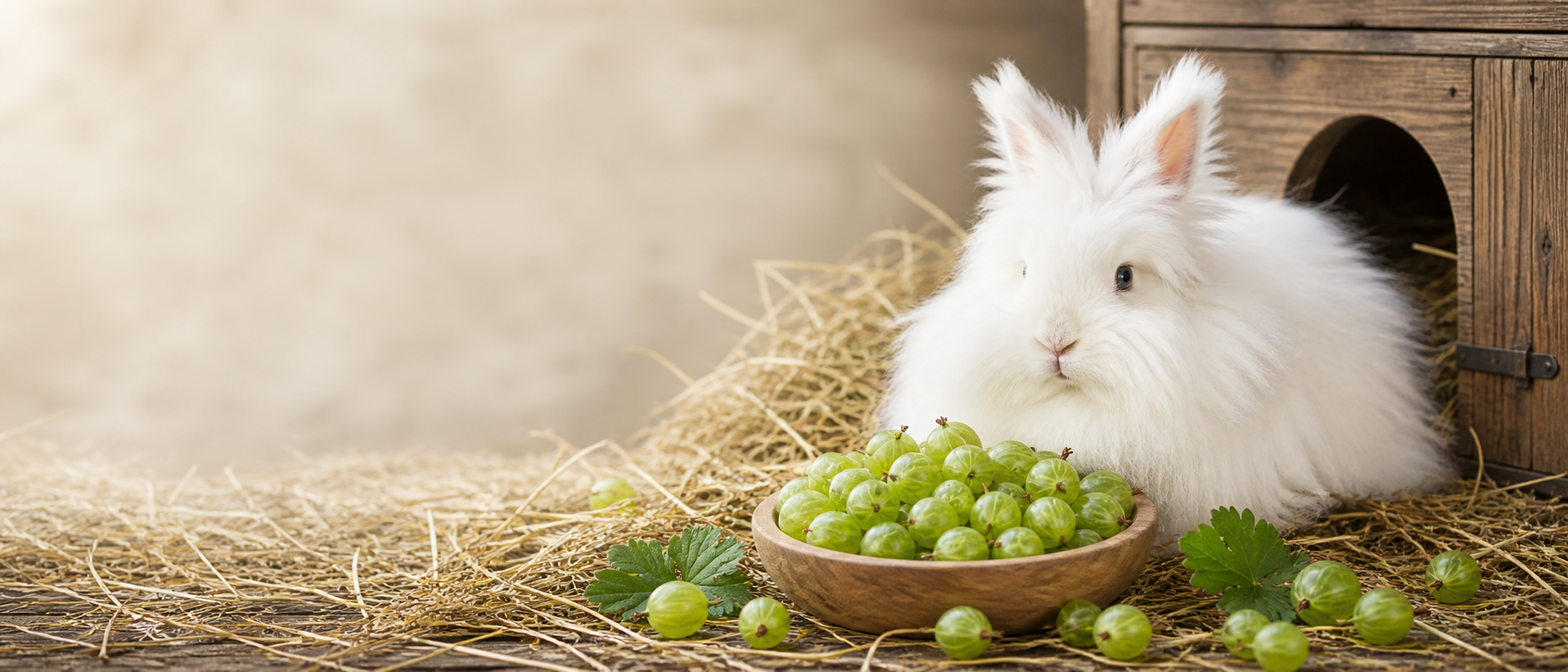
Yes, rabbits can eat gooseberries, but only as a rare treat
Fresh ripe gooseberries can be safe for rabbits in very small amounts, but they are sharp and sugary and should only be offered on very rare occasions.
Gooseberries are a classic British fruit, but very tart for rabbits
Gooseberries are a well-known British garden fruit, and rabbit owners with access to a gooseberry bush often wonder whether they are safe to share. The good news is that ripe fresh gooseberries are not toxic to rabbits and can be offered in very small amounts as an occasional treat.
However, gooseberries are significantly more tart and acidic than many other fruits, and unripe gooseberries can be especially sharp. They should only ever be offered very occasionally and should never replace hay, fresh water or leafy greens in a rabbit’s daily diet.
Are gooseberries safe for rabbits?
Yes, ripe fresh gooseberries are safe for most healthy adult rabbits when offered in very small amounts. The flesh and skin can both be eaten, though the tartness may put some rabbits off entirely.
Always use ripe gooseberries rather than unripe ones, as unripe gooseberries are far more acidic and could cause more digestive discomfort. A healthy rabbit diet should consist mostly of hay, which supports digestion and keeps teeth worn down naturally. Hay should make up around 80–90% of what a rabbit eats every day.
Nutritional value of gooseberries
Gooseberries contain water, fibre, and several vitamins. They also contain natural sugars and acids, which is why portion size matters so much.
Vitamin C
Gooseberries are a reasonably good source of vitamin C, though rabbits should not rely on fruit as a primary vitamin source.
Vitamin A
Gooseberries contain some vitamin A alongside other nutrients found in small amounts.
Some fibre
Gooseberries contain dietary fibre, but hay remains the essential fibre source for healthy rabbit digestion.
Water content
Fresh gooseberries are juicy and hydrating, which is another reason to keep portions very small.
Natural sugars and acids
Gooseberries are both sugary and acidic. Too many, especially unripe ones, can contribute to digestive upset.
Hay comes first
Gooseberries should never replace hay, fresh water, leafy greens or a balanced rabbit diet.
How many gooseberries can rabbits eat?
Gooseberries should only be offered in very small amounts. One gooseberry at a time is a sensible maximum for most rabbits, and even this should be offered no more than once a week.
Because gooseberries are so tart, many rabbits will show little interest in them. If your rabbit ignores the gooseberry completely, there is no need to push it. There are plenty of other rabbit-safe treats they may enjoy more.
- Offer just one ripe gooseberry at a time.
- Feed gooseberries no more than once a week at most.
- Only use ripe gooseberries, avoid unripe, very hard, or very sour ones.
- Introduce slowly and watch for any changes in poo, appetite or behaviour.
Unripe gooseberries and too many at once can cause problems
The acidity of gooseberries, especially unripe ones, makes it especially important to keep portions very small and to only ever use ripe, fresh berries. Never feed cooked or preserved gooseberry products.
- Never feed unripe gooseberries Unripe gooseberries are far more acidic and much harder on a rabbit’s sensitive digestive system. Only offer fully ripe, soft berries.
- Watch for digestive upset Too many gooseberries can cause soft stools or a change in digestion. If this happens, remove the fruit and return to hay and leafy greens.
- No cooked or preserved gooseberries Do not feed gooseberry jam, gooseberry fool, cooked gooseberries, tinned gooseberries, or any product containing gooseberries and added sugar.
Gooseberries are a very occasional summer novelty
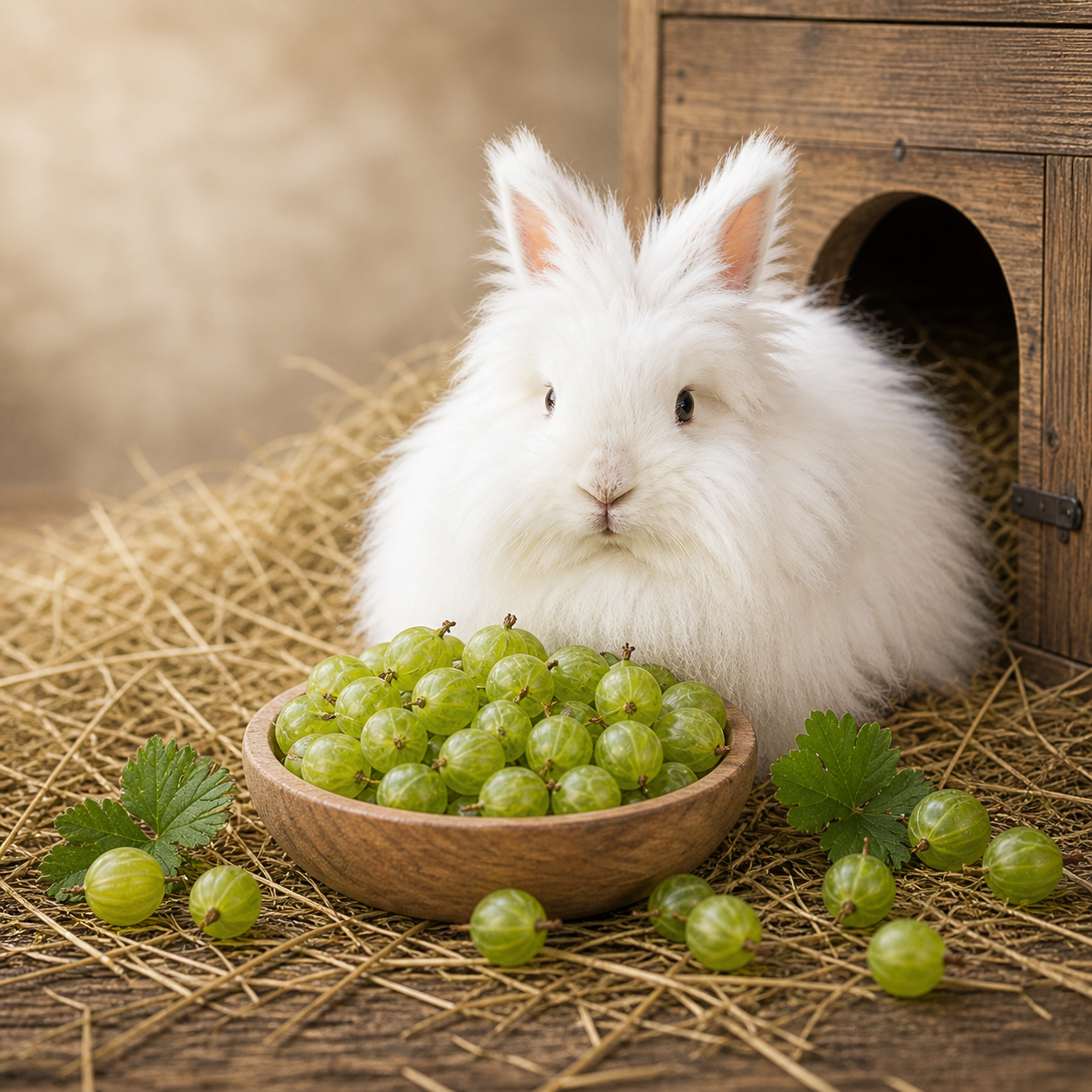
For rabbit owners with a garden gooseberry bush, it can be tempting to share a berry or two with your rabbit during the summer harvest season. The occasional ripe gooseberry is unlikely to cause any harm, but their tartness means they are more of a novelty than a treat most rabbits will seek out.
If your rabbit sniffs and walks away, that is completely fine. Rabbits are good at self-selecting foods they find unappealing, and gooseberries are one fruit where indifference is a very common response.
How to prepare gooseberries for rabbits
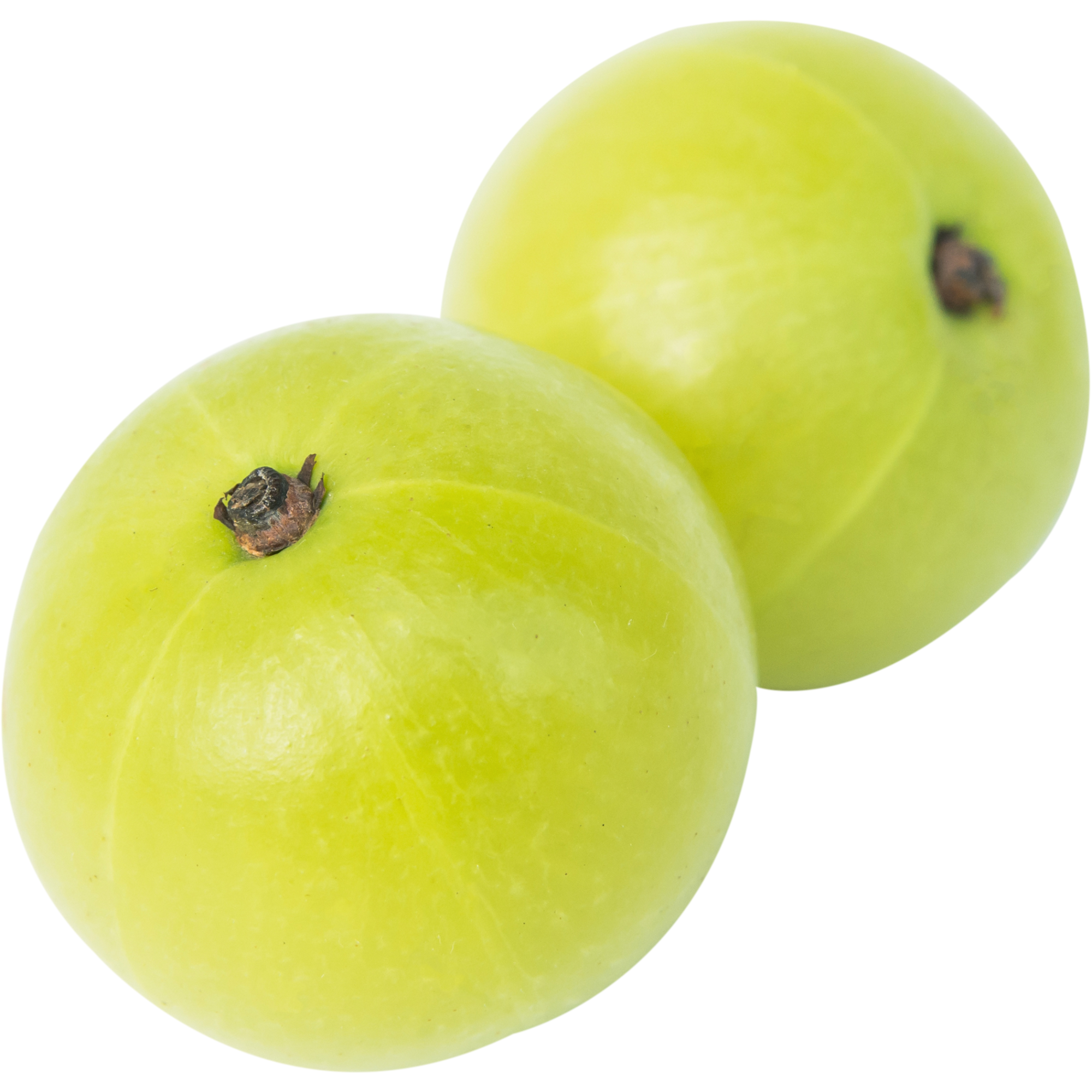
Before offering a gooseberry to your rabbit, a little preparation goes a long way. Only ever use fresh, ripe, plain gooseberries.
Choose ripe berries
Only use fully ripe, soft gooseberries. Avoid hard, very sour or unripe ones, which are much more acidic.
Top and tail
Remove the small stem end and the dried flower end (the top and tail) before feeding, as these are tough and fibrous.
Wash thoroughly
Rinse the gooseberry under cold water to remove any garden residue, dirt or pesticide traces from the skin.
Feed very occasionally
Offer just one gooseberry at a time, no more than once a week, and only during the fresh summer season.
Benefits and signs your rabbit enjoys gooseberries
When offered in very small amounts, a ripe gooseberry can add seasonal variety. Many rabbits will be indifferent, and that is absolutely fine.
Seasonal variety
A gooseberry can add a small seasonal novelty during the summer months when they are naturally in season.
Small amounts of nutrients
Gooseberries contain vitamins C and A, though they should not replace leafy greens or hay as nutrient sources.
Easy to portion
Their individual size makes gooseberries straightforward to portion, one is genuinely one serving.
Garden enrichment
For garden rabbits or those with outdoor time, sniffing and tasting a seasonal fruit can be mildly enriching.
Signs they enjoy it
Your rabbit may sniff cautiously and then nibble, or chew and look for more. Many will simply ignore it, both responses are normal.
Still keep treats rare
Even a rabbit that enjoys gooseberries should only have them very occasionally to keep their diet properly balanced.
Gooseberry FAQs
Quick answers to common questions about feeding gooseberries to rabbits.
Can rabbits eat gooseberries?
Yes, rabbits can eat ripe fresh gooseberries in very small amounts. They should be a rare treat because they are tart, acidic and contain natural sugars.
Are gooseberries safe for rabbits?
Ripe fresh gooseberries are safe for most healthy adult rabbits when offered sparingly. Avoid unripe gooseberries because they are much sharper and more acidic.
How many gooseberries can rabbits eat?
One ripe gooseberry at a time is enough for most rabbits, and it should be offered no more than once a week. Many rabbits may not like the sharp taste.
Can rabbits eat unripe gooseberries?
No. Unripe gooseberries are much more acidic and may upset a rabbit’s sensitive digestion. Only offer fully ripe, soft gooseberries.
Do you need to top and tail gooseberries for rabbits?
Yes. Remove the small stem end and dried flower end before feeding, then wash the gooseberry well and offer only a tiny amount.
Can rabbits eat cooked gooseberries or gooseberry jam?
No. Rabbits should not eat cooked gooseberries, gooseberry jam, tinned gooseberries, gooseberry fool or any preserved gooseberry product with added sugar.
Gooseberries can be a safe but very rare rabbit treat
Rabbits can eat ripe fresh gooseberries in very small amounts, and the occasional berry during summer season is unlikely to cause harm. However, gooseberries are one of the more acidic fruits you might consider offering, so portion size and ripeness really do matter.
Always top and tail the berry, use only ripe fruit, and keep the portion to one gooseberry at most. Never feed cooked or preserved gooseberry products. As always, a rabbit’s diet should be based primarily on hay, with leafy greens and vegetables making up the rest of their daily food.
Related rabbit care guides
More useful guides for rabbit foods, treats and daily diet basics.
RabbitCare.co.uk provides general rabbit care information for UK owners. It does not replace advice from a rabbit-savvy vet. If your rabbit stops eating, stops pooing, seems in pain or is suddenly unwell, contact a vet urgently.