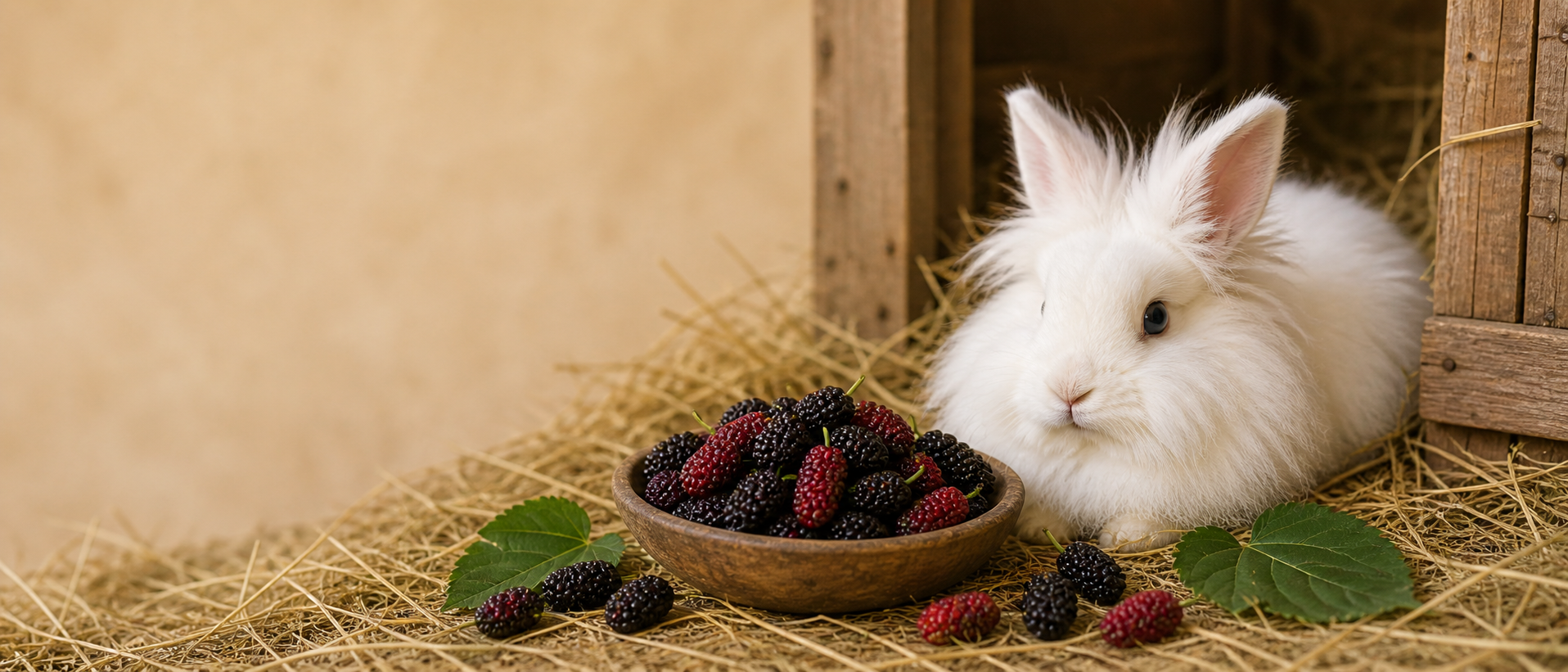
Yes, rabbits can eat mulberries, but only as an occasional treat
Fresh ripe mulberries are safe for rabbits in small amounts, but their sweetness and soft texture mean portions should be kept small and infrequent.
Mulberries are a sweet, soft summer fruit that rabbits can enjoy
Mulberries are a relatively unusual fruit in the UK, but rabbit owners with access to a mulberry tree often wonder whether the berries are safe to share. The good news is that ripe fresh mulberries are not toxic to rabbits and can be offered as an occasional treat.
Unlike gooseberries or cranberries, mulberries are naturally quite sweet and soft when fully ripe, which means many rabbits take to them readily. However, that sweetness is exactly why portions need to be kept small, too much sugary fruit can upset a rabbit’s delicate digestive system.
Are mulberries safe for rabbits?
Yes, fresh ripe mulberries are safe for most healthy adult rabbits when offered in small amounts. Both the flesh and the skin can be eaten. The deep colour of ripe mulberries, whether red, dark purple or black, is a natural sign of ripeness and does not indicate any harm.
As with all fruit treats, mulberries should sit firmly alongside, never in place of, the hay, fresh water and leafy greens that make up the core of a healthy rabbit diet. Hay should account for around 80–90% of everything a rabbit eats each day.
Nutritional value of mulberries
Mulberries contain a range of vitamins, fibre and plant compounds. They are sweeter than many other berries, so keeping portions controlled is important.
Vitamin C
Mulberries are a reasonable source of vitamin C, though fruit should not be relied on as a primary vitamin source for rabbits.
Vitamin K
Mulberries contain some vitamin K alongside other nutrients found in small amounts in the fruit.
Some fibre
Mulberries contain dietary fibre, but hay remains the essential fibre source for healthy rabbit digestion.
Antioxidants
The dark pigment in ripe mulberries comes from anthocyanins, the same plant antioxidants found in other deeply coloured berries.
Natural sugars
Ripe mulberries are noticeably sweet. Too many can contribute to digestive upset or weight gain in rabbits.
Hay comes first
Mulberries should never replace hay, fresh water, leafy greens or a balanced daily rabbit diet.
How many mulberries can rabbits eat?
Mulberries should only be offered in small portions. Two or three ripe mulberries once or twice a week is a sensible guide for most healthy adult rabbits. Because mulberries are soft and sweet, it is easy to overfeed them, many rabbits will happily eat far more than is good for them.
Smaller or younger rabbits should receive even smaller amounts. If you are introducing mulberries for the first time, start with just one berry and monitor your rabbit over the following day before offering more.
- Offer two or three ripe mulberries at a time, not a large handful.
- Feed mulberries once or twice a week at most.
- Start with a single berry when introducing them for the first time.
- Watch for changes in poo, appetite or behaviour after any new food.
Too many mulberries can upset digestion
Mulberries are sweet and very soft when fully ripe, which makes it easy to offer too many without realising. Unripe mulberries are also much more astringent and should never be fed to rabbits.
- Never feed unripe mulberries Unripe mulberries are astringent and hard on the digestive system. Only use fully ripe, deeply coloured berries that are soft to the touch.
- Watch for loose stools Too much sugary fruit can cause soft caecotrophs or digestive upset. If this happens, remove the fruit and return fully to hay and leafy greens.
- No mulberry products Do not feed mulberry jam, mulberry juice, dried mulberries, mulberry wine or any processed product containing mulberries to rabbits.
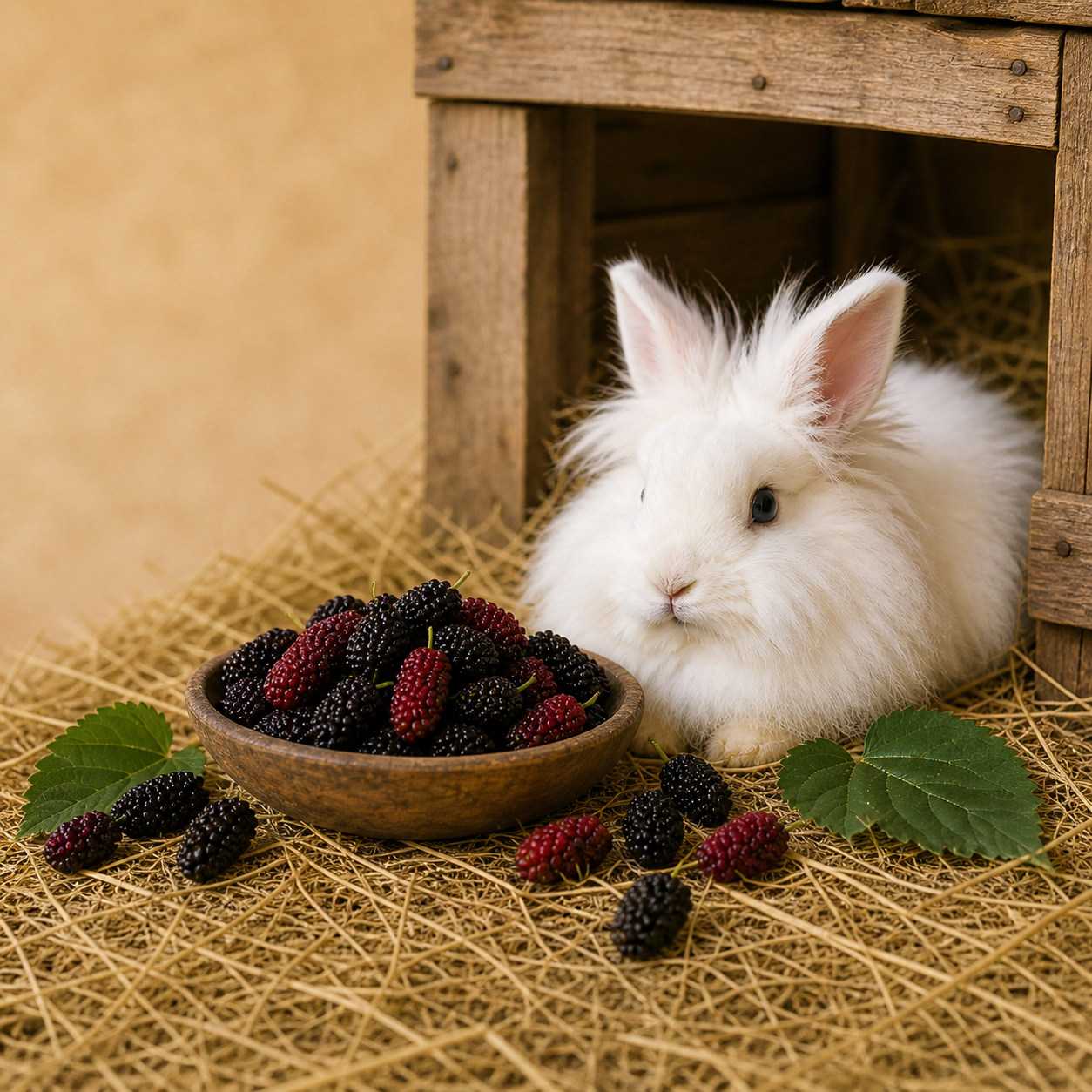
Mulberries are one of summer’s most rabbit-friendly berries
Among the tarter berries in this series, mulberries stand out for being genuinely palatable to most rabbits without much hesitation. Their soft texture means they require no preparation beyond washing, and their rich flavour tends to go down well.
They are only available fresh for a short summer window, usually July to August in the UK, so they are naturally a seasonal treat rather than something offered year-round. That built-in scarcity is actually a helpful reminder to keep portions small and infrequent.
How to prepare mulberries for rabbits
Mulberries need very little preparation, but a few simple steps make sure what you offer is clean, ripe and safe.
Choose ripe berries
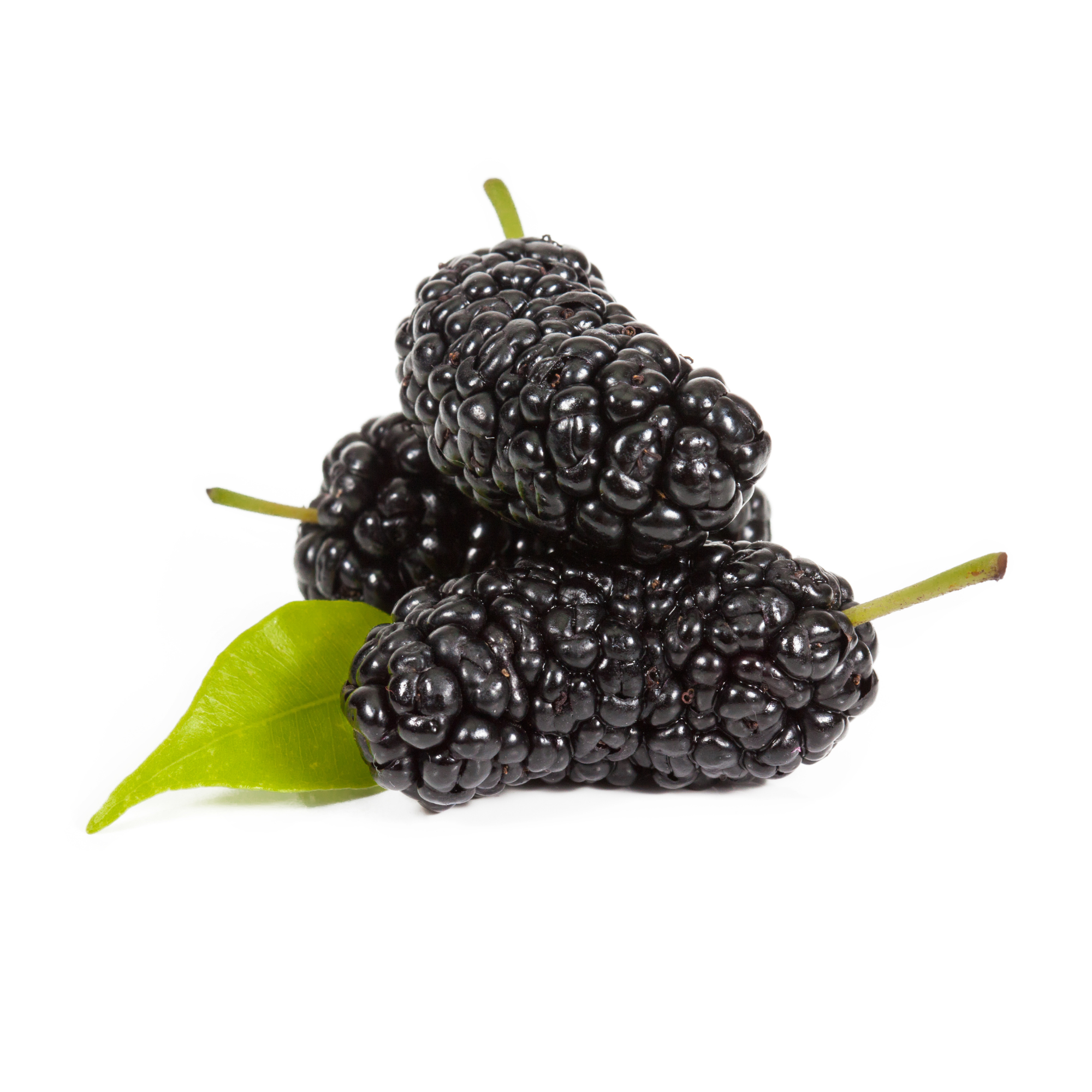
Only use fully ripe mulberries, deeply coloured, soft to the touch, and sweet smelling. Avoid hard, pale or unripe berries entirely.
Wash gently
Rinse mulberries carefully under cold water. They are very soft and bruise easily, handle them gently to avoid crushing.
Check for stalks
Remove any small stalks before feeding. The berry itself is the only part to offer, the stalk is tough and unnecessary.
Feed occasionally
Offer two or three mulberries at a time, no more than once or twice a week, and only during the fresh summer season.
Benefits and signs your rabbit enjoys mulberries
When offered in moderation, mulberries can be one of the more enjoyable summer treats for rabbits. Most take to them easily, which also makes them useful for gentle bonding.
Seasonal variety
Mulberries add a natural seasonal treat during the short summer window when they are available fresh.
Small amounts of nutrients
Mulberries contain vitamins C and K plus antioxidants, though they should complement rather than replace leafy greens.
Easy to portion
Individual berries make mulberries straightforward to count and portion accurately for each serving.
Bonding treat
Because most rabbits enjoy the sweet flavour, mulberries can work well as a treat during gentle handling or positive interaction.
Signs they enjoy it
Your rabbit may approach quickly, pick up the berry eagerly, chew enthusiastically or look around for more immediately after finishing.
Still limit treats
Even a rabbit that clearly loves mulberries should only have them occasionally to keep their overall diet properly balanced.
Mulberry FAQs
Quick answers to common questions about feeding mulberries to rabbits.
Can rabbits eat mulberries safely?
Yes, rabbits can eat fresh ripe mulberries in small amounts. They should be an occasional treat rather than a daily food because they are naturally sweet.
How many mulberries can a rabbit eat?
For most healthy adult rabbits, two or three ripe mulberries once or twice a week is a sensible maximum. Start with one berry when introducing them for the first time.
Can rabbits eat unripe mulberries?
No. Unripe mulberries are more astringent and harder on a rabbit’s digestive system. Only feed fully ripe, soft, deeply coloured mulberries.
Can rabbits eat dried mulberries?
No. Dried mulberries are concentrated in sugar and are not a suitable rabbit treat. Stick to fresh ripe mulberries only.
Do mulberries replace hay for rabbits?
No. Mulberries are only a small treat. Hay should remain the main part of a rabbit’s diet, with leafy greens and fresh water available every day.
Mulberries can be a safe and enjoyable summer treat for rabbits
Rabbits can eat fresh ripe mulberries in small amounts, and unlike some of the more astringent berries, most rabbits find them genuinely appealing. Their short summer season in the UK means they are naturally an occasional treat rather than something to worry about offering year-round.
Always use fully ripe, freshly washed mulberries, remove any stalks, and keep portions to two or three berries at a time. Never feed unripe, dried or processed mulberry products. As always, hay should form the foundation of your rabbit’s daily diet, with leafy greens and vegetables making up the rest.
Related rabbit care guides
More useful guides for rabbit foods, treats and daily diet basics.
RabbitCare.co.uk provides general rabbit care information for UK owners. It does not replace advice from a rabbit-savvy vet. If your rabbit stops eating, stops pooing, seems in pain or is suddenly unwell, contact a vet urgently.