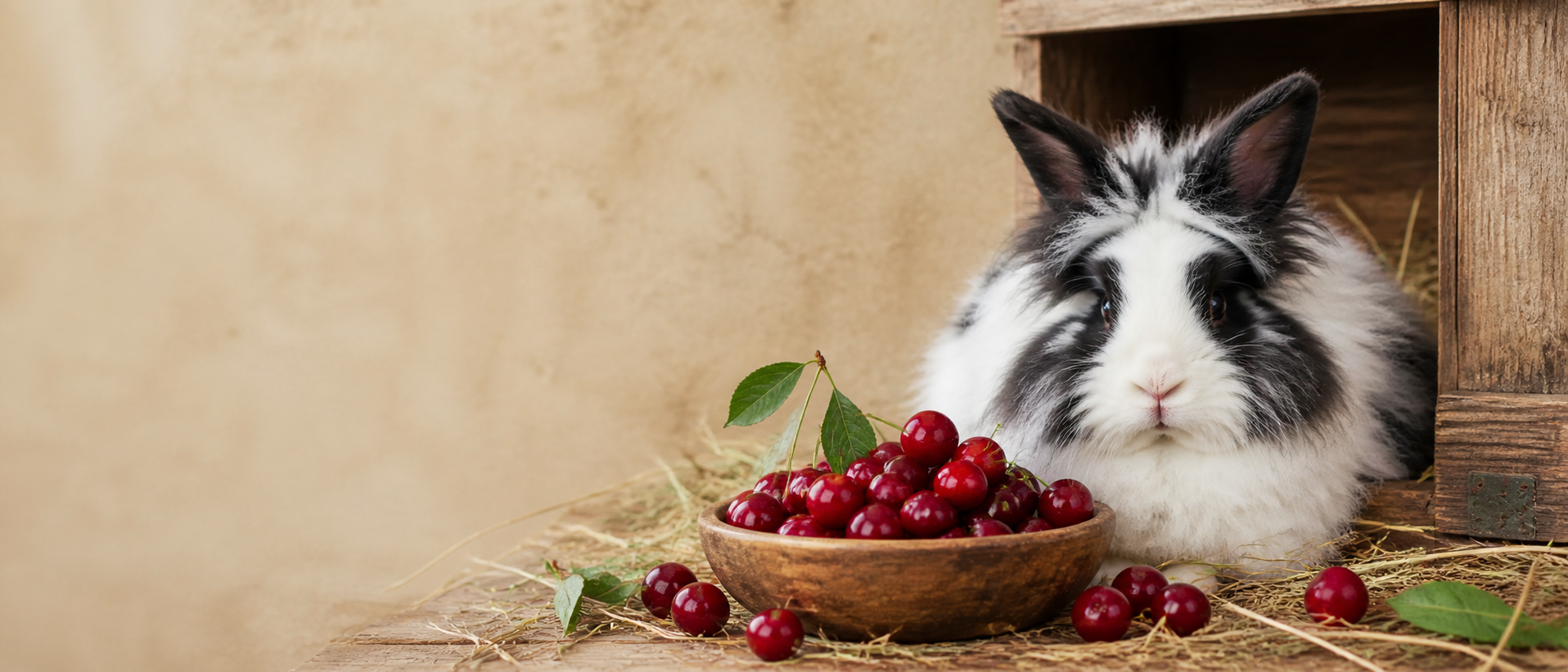
Yes, rabbits can eat cherry flesh, but always remove the stone and stalk first
Fresh cherry flesh is safe for rabbits as a small occasional treat, but the stone, stalk and leaves all contain compounds that are harmful and must never be fed.
Cherries are a sweet stone fruit rabbits can enjoy in small amounts
Cherries are a popular summer fruit, and their small size and sweet flavour make them immediately appealing to many rabbits. The good news is that fresh cherry flesh is safe for rabbits when prepared correctly and offered in small amounts as an occasional treat.
However, cherries require more careful preparation than most other fruits. The stone, stalk and leaves all contain cyanogenic compounds, substances that can release cyanide when broken down, and must always be removed completely before any cherry is offered to a rabbit. The flesh and skin alone are the safe parts.
Are cherries safe for rabbits?
Yes, the flesh and skin of a fresh, ripe cherry are safe for most healthy adult rabbits when given in small amounts. Cherries are naturally sweet and fairly high in sugar for their size, so they should be treated as a genuine treat rather than a regular part of the vegetable rotation.
The preparation rule is consistent and non-negotiable: always remove the stone, stalk and any attached leaves before feeding. Once properly prepared, a pitted cherry can be a well-received and enjoyable occasional treat. Never offer a whole cherry with the stone still inside, no matter how small it seems.
Nutritional value of cherries
Cherry flesh contains vitamins, antioxidants and water alongside natural sugars. Their small size makes it easy to misjudge how many is too many.
Vitamin C
Cherries contain vitamin C, though rabbits should not rely on fruit as a primary daily vitamin source.
Vitamin A
Cherry flesh provides some beta-carotene, which converts to vitamin A as part of a varied diet.
Antioxidants
The deep red colour of cherries comes from anthocyanins, antioxidant compounds also found in other dark berries.
Water content
Cherries are juicy and high in water, which is another reason to keep portions very small to avoid loose stools.
Natural sugars
Cherries are sweet and sugary for their size. Too many at once can upset digestion or contribute to weight gain.
Hay comes first
Cherries should never replace hay, fresh water, leafy greens or a balanced daily rabbit diet.
How many cherries can rabbits eat?
Because cherries are sweet and relatively high in sugar for their size, portions should be kept very small. One or two pitted cherries, with the stone, stalk and leaves removed, once a week is a sensible maximum for a healthy adult rabbit.
Cherries are small enough that it can feel natural to offer a handful, but the sugar content adds up quickly. If you are introducing cherries for the first time, start with just one pitted cherry and monitor your rabbit’s droppings and appetite over the following day before offering more.
- Offer one or two pitted cherries at a time, not a bowlful.
- Feed cherries once a week at most.
- Always remove the stone, stalk and any leaves before feeding.
- Introduce slowly and watch for any changes in poo, appetite or behaviour.
Always remove the stone, stalk and leaves, none are safe for rabbits
Unlike nectarines where only the stone is a concern, cherries have three parts that must be removed: the stone, the stalk and any attached leaves. All three contain cyanogenic glycosides, compounds that can release cyanide when metabolised, and none should ever be fed to a rabbit.
- Remove the stone every single time Never offer a whole cherry. Always pit the cherry completely and check for any stray stone fragments in the flesh before serving.
- Remove the stalk and leaves too Cherry stalks and leaves also contain cyanogenic compounds. Twist or cut the stalk off and discard any leaves before the cherry goes anywhere near your rabbit.
- No glacé, dried or tinned cherries Glacé cherries, dried cherries and tinned cherries in syrup are all far too high in sugar and are not suitable for rabbits under any circumstances. Only fresh, raw, pitted cherry flesh is appropriate.
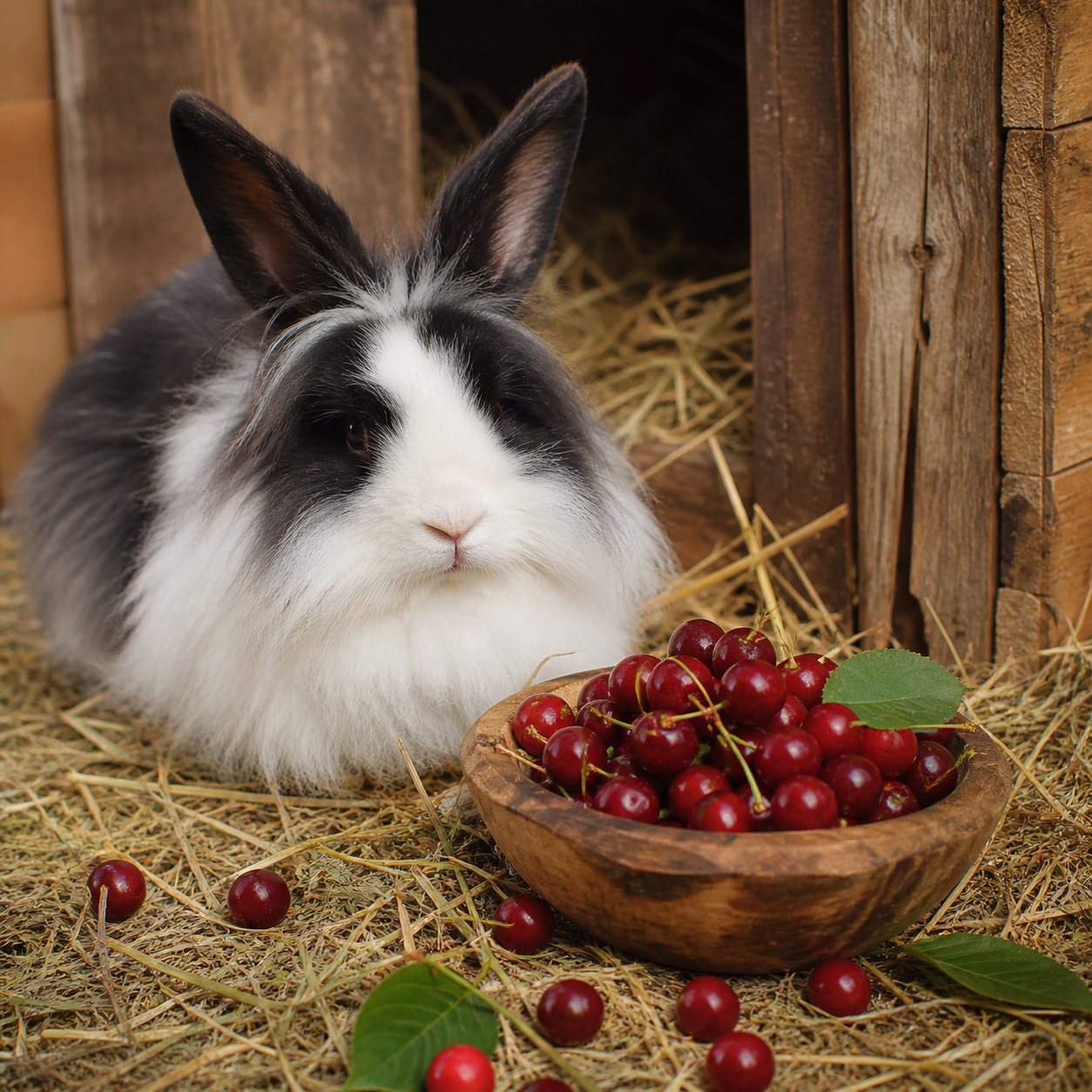
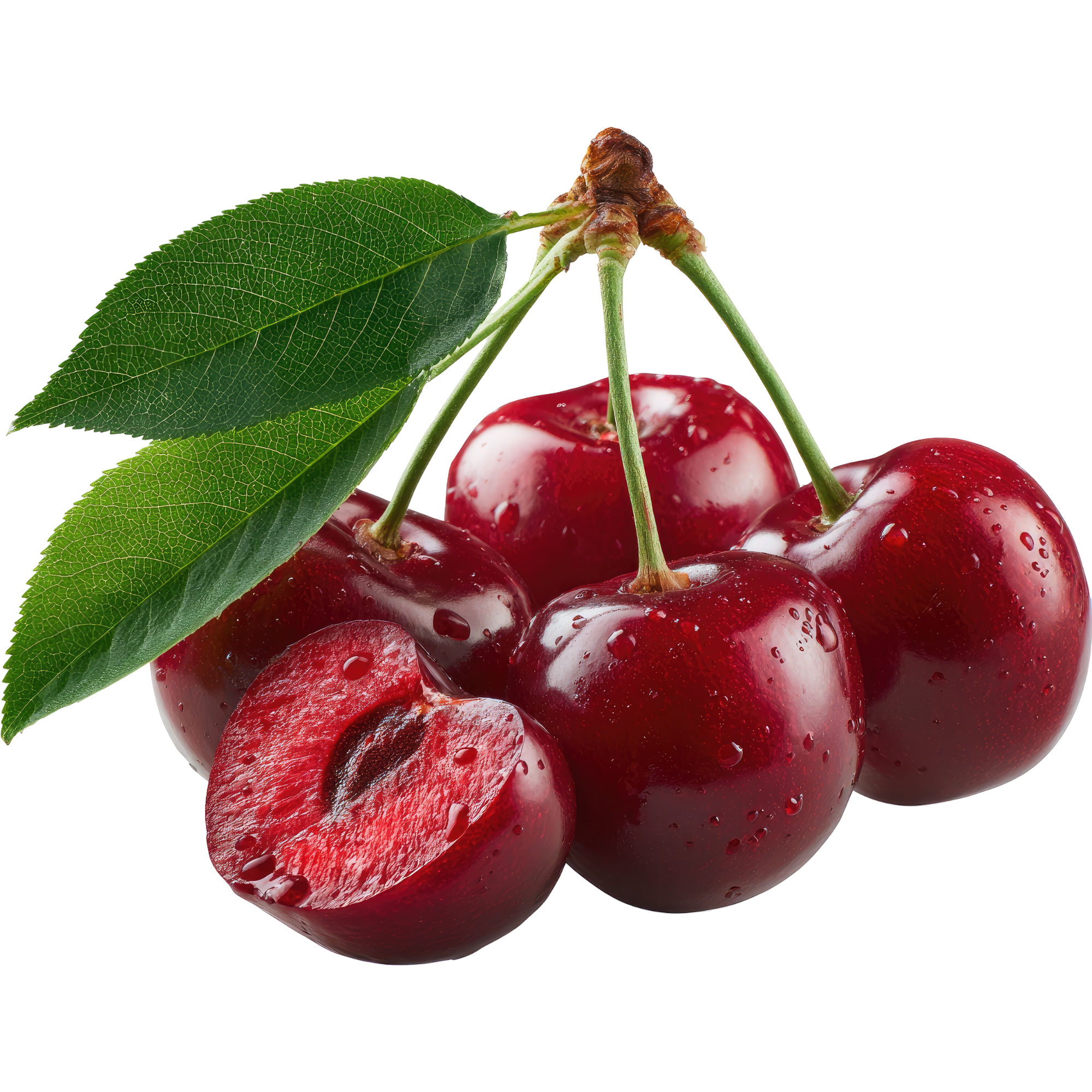
Properly prepared cherries are a treat most rabbits love
Once the stone, stalk and leaves are removed, cherries offer a soft, sweet and fragrant treat that most rabbits respond to very enthusiastically. Their small size, once pitted, makes them easy to portion, and the flesh is soft enough that even smaller rabbits handle it easily.
Fresh cherries are a naturally seasonal fruit in the UK, available mainly through June and July, which helps keep them a genuinely occasional summer treat rather than something offered throughout the year. That seasonal rhythm is a useful natural prompt to keep portions rare and small.
How to prepare cherries for rabbits
Preparing cherries for rabbits takes a little more care than other fruits, but the steps are straightforward once they become habit.
Choose ripe cherries
Use fresh, fully ripe cherries. Avoid overripe or mouldy fruit, and never use glacé, dried, tinned or sweetened cherries.
Remove stalk and leaves
Twist or cut off the stalk and discard any leaves attached to it. Both contain compounds that are not safe for rabbits.
Pit the cherry completely
Remove the stone entirely. Check the flesh carefully for any stray fragments before offering it to your rabbit.
Wash and serve
Rinse the pitted flesh under cold water, then offer one or two pieces. The skin is safe to leave on.
Benefits and signs your rabbit enjoys cherries
When prepared correctly and kept as a rare treat, cherries can be one of the most enthusiastically received fruits you offer. The key is keeping the preparation consistent and the portions firmly controlled.
Highly appealing to most rabbits
The sweet, fragrant flesh of a pitted cherry tends to be eagerly accepted, making it a reliable treat for positive interaction.
Small amounts of vitamins
Cherry flesh provides vitamins C and A alongside antioxidants, complementing a diet already based on hay and leafy greens.
Seasonal and naturally rare
The UK cherry season runs roughly June to July, making cherries a naturally limited treat without any extra effort.
Soft and easy to eat
Pitted cherry flesh is soft enough for most rabbits to manage easily, making it suitable as a gentle bonding treat.
Signs they enjoy it
Your rabbit may approach quickly, pick up the piece confidently, chew with obvious enthusiasm or look for more immediately after finishing.
Enthusiasm means stay firm
If your rabbit loves cherries, it is even more important to keep portions to one or two, eagerness is not a reason to offer more.
Cherry FAQs for rabbits
Quick answers to common questions about feeding cherries to rabbits safely.
Can rabbits eat cherries?
Yes, rabbits can eat the fresh flesh and skin of cherries in very small amounts, as long as the stone, stalk and any leaves are removed first. Cherries are sweet, so they should only be an occasional treat.
Can rabbits eat cherry stones?
No. Cherry stones should never be fed to rabbits. Always remove the stone completely and check the flesh for any fragments before offering cherry to your rabbit.
Can rabbits eat cherry stalks or leaves?
No. Cherry stalks and leaves are not safe for rabbits and should be removed and discarded before feeding. Only the fresh pitted flesh and skin should be offered.
How many cherries can rabbits eat?
One or two pitted cherries once a week is a sensible maximum for a healthy adult rabbit. Start with a smaller amount if your rabbit has never eaten cherries before.
Can rabbits eat dried, glacé or tinned cherries?
No. Dried cherries, glacé cherries and tinned cherries in syrup are too sugary for rabbits. Feed only fresh, raw, fully pitted cherry flesh as an occasional treat.
Cherries can be a safe summer treat when prepared with care
Rabbits can eat fresh cherry flesh in small amounts, and most find it genuinely appealing. The preparation steps are non-negotiable, the stone, stalk and leaves must all be removed every single time, but once that becomes habit, cherries are a straightforward and enjoyable occasional treat.
Keep portions to one or two pitted cherries at a time, offer them no more than once a week, and never feed glacé, dried or tinned versions. As with all fruit, cherries are a treat on top of a diet that should be built firmly around hay, with fresh vegetables and leafy greens making up the rest of your rabbit’s daily food.
Related rabbit care guides
More useful guides for rabbit foods, treats and daily diet basics.
RabbitCare.co.uk provides general rabbit care information for UK owners. It does not replace advice from a rabbit-savvy vet. If your rabbit stops eating, stops pooing, seems in pain or is suddenly unwell, contact a vet urgently.